MRO: Nigeria’s Aviation Minister Wants Africa To Move From Dependency To Self-Sufficiency
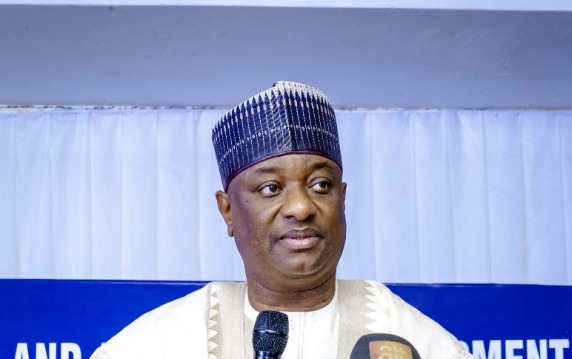
Nigeria’s Minister of Aviation & Aerospace Development, Mr. Festus Keyamo (SAN) the time has come for Africa to move from dependence to self-sufficiency considering the drain of over $2.5 billion in foreign exchange every year through African airlines’ outsourcing of aircraft Maintenance, Repair & Overhaul (MRO) to Europe, Middle East and Asia.
Speaking in Addis Ababa during the 2026 Ethiopian Aviation Forum, Keyamo said “Africa currently loses billions of dollars annually to overseas maintenance, driven by a shortage of high-capacity MRO infrastructure. According to the Ecofin Agency, the majority of heavy maintenance (around 50 per cent) is still outsourced to Europe, the Middle East, or Asia, resulting in a drain of over $2.5 billion in foreign exchange every year. This capital flight is neither sustainable nor strategic. Ethiopian Airlines has demonstrated what is possible when a nation commits to world-class MRO capability, serving not only its own fleet but also carriers across Africa and beyond. True self-reliance will require Africa to consolidate its current, small, fragmented facilities and invest in at least 5 to 10 major, modernized hubs.
Nigeria, through ongoing aviation and aerospace development reforms, is prioritizing the development of regional MRO hubs, strengthening technical workforce training, incentivising private sector participation, and enhancing regulatory oversight to meet international standards.”
“Air cargo is the lifeblood of modern economies. Intra-African trade under the AfCFTA cannot succeed without efficient, reliable, and affordable airfreight systems. Ethiopian Airlines has again set a continental benchmark in cargo operations, becoming a critical logistics bridge between Africa, Asia, Europe, and the Americas.
Nigeria, as Africa’s largest economy and a strategic West African hub, is investing in modern cargo terminals, cold-chain infrastructure, digital cargo-tracking systems, and public-private partnerships along logistics corridors.
We must harmonize customs processes, integrate digital platforms, and strengthen aviation security to create a seamless African cargo ecosystem. If Africa is to trade with itself, aviation must lead that integration,” said Keyamo.
He further said “the future of aviation is digital, data-driven, and automated. AI, predictive maintenance, unmanned aerial systems, satellite navigation, and smart airport systems are redefining global standards. Africa must not be a passive consumer of aviation technology. We must be co-creators.
Nigeria is strengthening partnerships with technology providers and aviation training institutions to build local competence in aviation data analytics, air traffic modernization, drone regulation and integration, and aerospace R&D. Our young population is our greatest asset. With the right policy frameworks, Africa can become a global innovation hub.”
On sustainability and green aviation, Keyamo said “Climate change is no longer a future concern. It is a present responsibility. Sustainable Aviation Fuel (SAF), carbon offset programs, fleet modernization, and energy-efficient airport operations must move from aspiration to implementation. Ethiopian Airlines’ investments in modern fuel-efficient aircraft and environmental stewardship prove that growth and sustainability can coexist.
Nigeria is aligning with global environmental frameworks and is committed to encouraging fleet renewal, supporting sustainable fuel research, developing green airport policies, and integrating carbon accountability mechanisms. Africa must define its own sustainability pathway—one that balances environmental responsibility with developmental realities.”
He reaffirmed Nigeria’s readiness to deepen bilateral and multilateral aviation cooperation with Ethiopia and all African states present, charging participants that the forum should not end “as a gathering of speeches, but as a launchpad for measurable commitments. Let Addis Ababa 2026 be remembered as the year Africa decided to build its own MRO strength, dominate its cargo market, lead in aviation innovation, and commit decisively to sustainability.”
He commended Ethiopian Airlines for becoming Africa’s flagship carrier and a global symbol of resilience, strategic vision, and operational excellence, stating that “ Ethiopian Airlines is living proof that African aviation can compete, lead, and innovate at the highest international standards. Its achievements in fleet modernization, route expansion, MRO capability, cargo dominance, and aviation training are a source of pride for our entire continent.”