Africa’s Air Transport Leaders Highlight Importance Of Intra-Connectivity
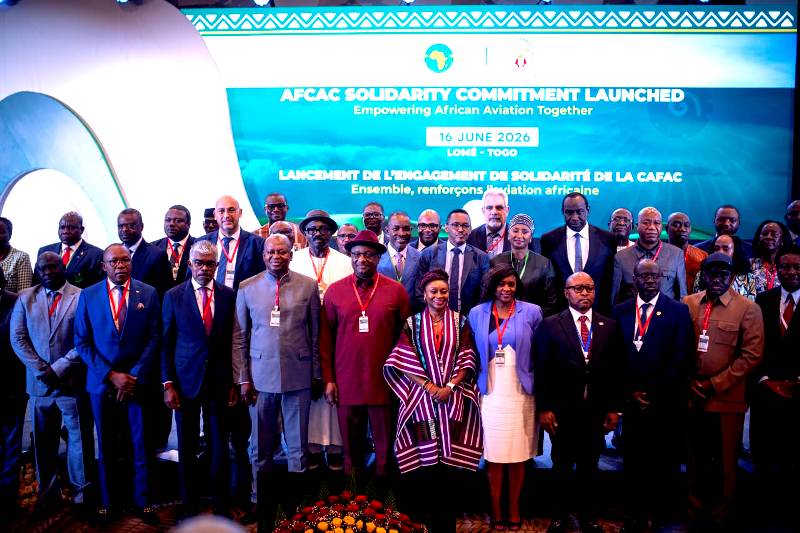
Air Transport leaders across Africa have been speaking to AVIATION MONITOR on the importance of easing air connectivity within cities in Africa, why countries that are yet to sign the Single Air Transport Market Agreement (SAATM) should do so and the necessity of SAATM implementation by countries that have signed up to it.
Commenting on countries that are yet to sign up, Nigeria’s Minister of Aviation & Aerospace Development, Mr. Festus Keyamo (SAN) said “I think what is driving them to do this is protectionism. Many of them are very protective of their sovereignty, their national spaces; and many of them are also trying to protect some routes either for their flag carriers or their national carriers and they don’t want competition on those routes. So, they are still paying lip service to SAATM. We have about 38 signatories now. We still have about 16 to go. Even among those 38 signatories that that have signed, they have still not implemented it. The advice I have for them is that this is a symbiotic thing. It is symbiotic because SAATM does not only help those countries you give SAATM access to help your country. It is symbiotic. You cannot connect Africa without giving fifth freedom rights to those properly designated airlines from SAATM countries. I want them to know that they are slowing down the development of Africa without connecting Africa. That is one thing the banks have realized at the end of the day. They have tried to promote trade over the years. They have tried to promote development tourism in Africa over the years but it is not working. Why? because you have not done the basic thing. Connect Africa first. Now, they are all back to the drawing board. They are now promoting aviation in Africa. They are trying to modernize fleet, promote human capacity development, infrastructure. They have all of these packages; both the Afreximbank, the African Development Bank, and so on. For those countries that a yet to implement therefore, my advice to them is this. Please, they should not hamper the growth and development of Africa. It has a multiplier effect. The moment you connect Africans and implement fifth freedom right, it promotes tourism, trade, investment, even in their country. When you make it difficult for people to come to your country and you make it difficult for you to go to other countries, how can you promote intra-African trade? It is not possible.”
The Minister of Transport, Angola, Mr. Rocardo Viegas D’Abreu said “we need to effectively implement what we agreed as conventions and protocols. Intra-African trade will be hindered if we don’t implement them.”
The Director General of Gambia Civil Aviation Authority, Mr. Fansu Bojang said “it is unfortunate that we are still here repeating the same thing that has been going on since 1988 that our founding fathers conceptualized the issue of liberalizing air transport and opening up our skies to enhance movement of our people and goods. Unfortunately, almost 40 years later, we are still talking about the same thing. The reason African Union came up with SAATM is to fast-track the implementation through policy of something that has been gathering dust for almost 40 years and we know that truly, for Africa to be developed and inter connected and improve trade between themselves, people have to move. This has been stifled by a lot of bureaucracy that our peoples encounter between borders in travelling between Africa. So, the idea of SAATM is to break down those barriers and make the travel between countries in Africa seamless. This is more needed in Africa than somewhere else. The idea of opening the borders started with the idea that it will make air transport more accessible to our people. It is not only about opening the borders. It is about making it affordable to a people but the spirit of opening it is the first. We have people with this narrow protectionism of our borders and our sovereignty. We have to see Africa as a country.”
The West African SAATM Ambassador for African Civil Aviation Commission (AFCAC) and Chief Executive Officer of Overland Airways, Capt. Edward Boyo said “if we can open the skies, every other thing we desire will follow. If the people are integrated, our people will like it. The 38 countries that have signed need to move forward. When the others see progress, they will join. Open the airspace and free movement of goods and services will follow. We must not be afraid of our shadow in Africa.”
The Chief Executive Officer of ASKY, Mr. Esayas Woldemariam Hailu said “what constrains aviation growth is an overly restrictive regulatory environment, excessive taxation, and slow implementation of the Single African Air Transport Market (SAATM). Embracing liberalization would unlock economies of scale, reduce costs, and make intra-African flying more viable, ultimately benefiting connectivity, trade, tourism, and economic growth.”
The Chief Executive Officer of Uganda Airlines, Ato Girma Wake said “I believe if they have not learnt so far, they will never learn that countries are countries. Even though in African Union and AFCAC, we agree, when they go back, they implement the old policy. They will be the ones to be left behind. They will be the ones to suffer. The moment you restrict a carrier operating into your city, you are denying your people from having a reasonable cost effective travel arrangement and it will not help them in the long run but the majority of Africa countries are free today. Those ones who are trying to restrict movement will gradually come to their senses when they see the benefits that others are getting. So, those that are willing to go should do so. Those that are not willing, at their own time, they will come back and implement it.”
The Director General, Civil Aviation, Nigeria Civil Aviation Authority, Capt. Chris Ona Najomo said “SAATM is essential for Africa’s economic integration – Therefore, full implementation is not just an aviation reform but a core pillar of Agenda 2063 and a catalyst for AfCFTA. The benefits are proven and immediate. Countries that have opened their skies under SAATM already enjoy increased connectivity, more competitive airlines, and stronger tourism flows. All regulatory tools needed for full implementation already exist. AFCAC has provided harmonized templates for Air Service Agreements, competition rules, and consumer protection. Institutions only need to adopt and operationalize them as there is no reinvention required. SAATM strengthens, not weakens, national carriers. Fair-competition rules protect smaller airlines, while liberalization expands market access and encourages partnerships. Sovereignty over safety and security remains fully intact. Implementation is straightforward and supported. Open eligible routes, remove restrictive bilateral clauses, and align national regulations with SAATM. AFCAC, AFRAA, and regional bodies are available to provide technical assistance and capacity building. SAATM is an economic development tool. It drives job creation, tourism, trade, and investment. For landlocked and under-served regions, it is a lifeline for growth and mobility. Finally, the time to act is now. Africa cannot afford fragmented skies. Full compliance ensures that all states, large and small, benefit from a unified, competitive, and connected aviation market.”
The Secretary General of AFCAC, Ms. Adefunke Adeyemi has said that SAATM is not only transforming air connectivity in the continent but also redefining how Africa moves, trades and grows together as one aviation market. Adeyemi has through her commission over the years, been working with member states, regulators, airlines and airports to harmonize regulations and advance the implementation of a unified African aviation market, which the SAATM initiative represents.