Making Aviation Infrastructure Projects Bankable In Africa

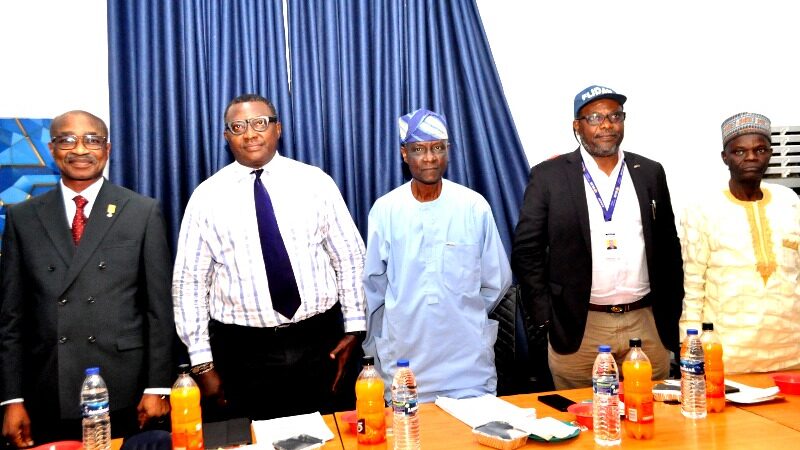
During the panel session on Investment infrastructure at the African Air Transport Convention & Expo held in Lome, Togo, June 15 to 19, 2026, key players in the sector deliberated on how aviation infrastructure projects can attract financiers’ interest in Africa.
The Director General of Namibia Civil Aviation Authority, Ms. Toska Stem noted that without government offering guarantees to financiers of aviation infrastructure projects, it would be difficult to attract them.
The Director General of Zimbabwe Civil Aviation Authority, Mr. George Mashababe said the reason many aviation projects remain at conception stage is not because of lack of demand for such projects but failure to present them as bankable projects. He cited weak project feasibility studies and absence of clear risk allocation and identification as challenges.
“Without clarity, investors step back,” he said, adding that where ministries, regulators and operators are not fully aligned, implementation becomes difficult. He stressed that investors prefer a focused pipeline of projects rather than a long list of scattered items.
“Project preparation is more important than financing discussions,” he said.
“A bankable project that will yield demand is better than a politically driven project. Bankable projects do not happen by accident. If we fix the fundamentals, they will happen,” stated Mashababe, who stressed that an alignment between ministries of aviation and finance is important.
The Director General of Mozambique Civil aviation Authority, Mr. Emmanuel Chavez emphasized the importance of government guarantees to convince financiers, adding that there is need to build the right institutional capacity and maintain clear and stable governance.
“Rules should not change overnight,” said Chavez, stating that better preparation, strong institutions, reliable data and sound governance are requirements for actualizing bankable projects. He further stated that if an airport has less than 100,000 passengers per year, there is no bankability to attract financiers.
The Regional Director, International Civil Aviation Organization (ICAO), West & Central Office, Mr. Romain Ekoto said financiers do not support ideas but support projects. He said environment is critical for projects to attract financing, adding that ICAO Standards are not just technical requirements but risk repellers. He said investors look at regulatory compliance and institutional maturity.
“The strong implementation of ICAO standards reduces risks. So, standards compliance reduces risks. Lower risks attract financing,” he said.
Ekoto said to attract financing, your project should align with objectives of the bank. The Civil Aviation Authority, Ministry of Finance and Ministry of Planning should cooperate to achieve this and “we need to invest in acquiring data.”
To close existing gaps, Ekoto said there has to be integration of aviation into the country’s national aviation development plan, development of relationships with development partners and financial institutions.
“Attracting investment is not when you meet the investor. It happens at the preparation stage,” Ekoto said.
Mr. Raphael Kuuchi of African Airlines Association (AFRAA) noted that airports are more interested in getting Public Private Partnership (PPP) arrangements on the back of the operator and that when the project is handed over to the management, “management goes crazy with charges that airlines pay. Airlines should be involved in planning of any PPP arrangements.”
“Within the next six months, we want to see that all airport PPPs in Africa involves the airlines. We are not interested in stopping projects. We just want to be carried along because at the end of the day, we will still be the ones to pay for those projects. We also want to engage with DFIs to know how we can finance aircraft acquisition,” said Kuuchi.
The Secretary General of Airports Council International (ACI), Mr. Ali Tounsi said the reality is that investors are looking for airport with over five million passengers.
“The second reality is this. Why do we have a lot of airports with no traffic? Why? It is because these are political ambitions-politically motivated agenda. Many have airports with two runways, no traffic. Yet, we invest in such.”
“Again, attractiveness of our routes is important. In Africa, many routes are not attractive,” he said, adding that data is biased in African continent. This has effect when it comes to taxes and charges,” said Tounsi.
Concluding his thoughts, Tounsi said “there is no one single model for PPPs financing.”
The Managing Director and Chief Executive of Federal Airports Authority of Nigeria, Mrs. Olubunmi Kuku noted it was important to seek to improve infrastructure for transiting passengers and passenger traffic while ensuring that airports infrastructure projects are bankable. She also advised financial institutions to establish aviation desks so as to ensure professionalism in the process.
In his intervention, the Chief Operating Officer of ATNS, Mr. Matome Maholola said most Air Navigation Service Providers in Africa are still attached to government and are not autonomous. He also said it is difficult to attract capital from financiers when there is no enough traffic.
“That puts a demand risk,” he said, adding that African states need to manage foreign exposure as transaction are done with different currencies.