The Right Way To Run An Airline Business, By Ato Girma Wake
“Many carriers spend as if there is no tomorrow.”
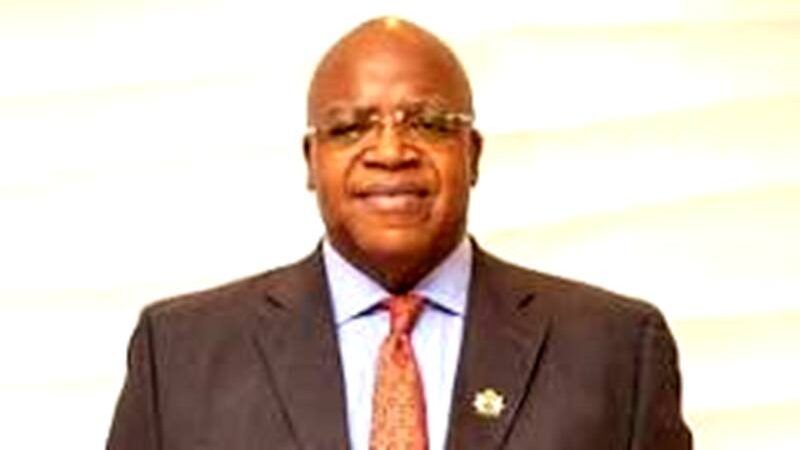
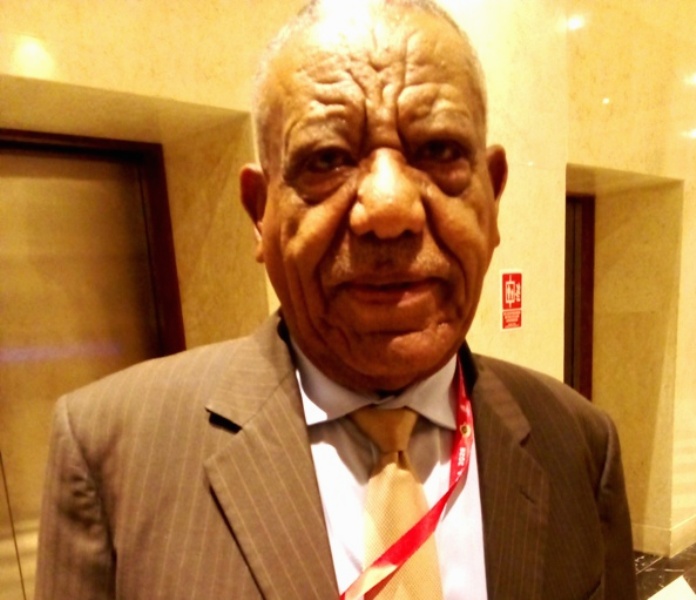
83 year-old Ato Girma Wake has more than five decades experience in airline business. He was Chief Executive Officer of Ethiopian Airlines from 2004 to 2011, during which he spearheaded its expansion into Africa’s largest and most profitable carrier. He was Chairman, Board of Directors for RwandAir from 2012 to 2017. The current Acting CEO and Technical Advisor of Uganda Airlines was appointed into this position on February 13, 2026. His tenure is a short-term, transitional mandate directed by Uganda’s President Yoweri Museveni to rectify management weaknesses. He is scheduled to hold the position until a substantive, permanent CEO is recruited in July 2026.
This veteran, whose experience has been helpful to aviation in Ethiopia, Rwanda, DRC and Togo, shares perspectives on airline business in Africa in this exclusive interview with AVIATION MONITOR.
Q: FROM YOUR MANY YEARS OF EXPERIENCE IN AIRLINE BUSINESS, THERE ARE OBVIOUSLY CERTAIN THINGS THAT AIRLINES OUGHT TO DO TO SUCCEED. WHAT ARE SOME OF SUCH THINGS THAT AIRLINES OUGHT TO DO THAT THEY ARE NOT DOING?
A: I believe first of all, they have to plan everything they do. You don’t just wake up one morning and say you are running airline. There must be proper planning; planning based on data, on market studies. Then, the execution has to be thorough. It is not touch and go. They have to really continue to work on it. The third is financial discipline. Many carriers spend as if there is no tomorrow and at the end, they find themselves where there is no money to buy parts. There is no money to service aircraft. So, yes, they have to spend all they have to spend but they must really evaluate it before they put their hands on the money and spend it. There must be a cost control and financial discipline in the organization. Anything that does not have financial discipline will not work. The only area where I don’t push to cut cost is in training. They have to support training. Even if they have to borrow money to train people, they should do that because a trained manpower is what gives you the returns A trained manpower is what keeps the customers. A trained manpower is the one that keeps your aeroplane flying. So, don’t cut that.
Q: THERE HAS BEEN THIS ARGUMENT ABOUT AIRLINE MODEL THAT BEST SUITS NATIONAL INTEREST. THERE IS A MODEL OF A NATIONAL CARRIER RUN BY GOVERNMENT, A FLAG CARRIER RUN BY A PRIVATE CONCERN, AND A JOINT STAKE NATIONAL AIRLINE WITH GOVERNMENT AND PRIVATE CONCERN SHARES. BASED ON YOUR EXPERIENCE, WHICH OF THE THREE OPTIONS WOULD YOU RECOMMEND FOR A COUNTRY?
A: It is not a question of whether it is owned by government, by individuals or a group of individuals. It is the way such airline is run. Ethiopian Airlines is 100% government but the airline is run on commercial basis. It doesn’t operate anyway different from a private airline because they are responsible for the workforce. They are responsible for the growth. It is the way it is run. If it is commercially run, government airline could be good. If it is privately run and is done well, it is also good. In Africa, there are very few private people who can start a decent airline; very few. For me, for at developmental stage, you don’t build your own road. An airline is a road to progress. Any airline that is not fully supported by an own government would have a difficulty at succeeding. So far, for me, in Europe, maybe private airline is always good. Don’t forget. All the airlines you see in Europe today-the British Airways, Lufthansa, Air France, Alitalia were all owned by the government. It took time for them to go from government to privatization but they were built as a government organization. Why shouldn’t we do it in Africa? We started late but let us evolve gradually. To me, whether it is private or government, it is the way the business is run that matters. If it is run on a commercial basis, I don’t care who owns it.
Q: IN AFRICA, THERE IS THIS CHALLENGE OF AVIATION PROFESSIONALS LEAVING THE CONTINENT MASSIVELY FOR OTHER CLIMES. WHAT IS YOUR ADVICE ON HOW TO RETAIN AFRICA’S AVIATION PROFESSIONALS IN AFRICA?
A: That will continue to happen because first, even if you offer them the same type of salary; let me take as an example, the Gulf carriers. They are the ones taking bulk of African professionals. In our continent, for the senior job like that, there is 30% to 35% tax. Even if you pay the same salary that they pay in the Gulf, there is no tax there. So, they are automatically 35% more than what they would get at home. So, for me, as long as they serve you for sometime, 15 years, 20 years, 30 years; I believe you should try to keep them but if they go, you should have other people ready to take their place. Get younger people to move in their place. It is a way of life. You cannot change it but find a way of really replacing them fast. Prepare always, some people, who are trained in that area to be ready to take over. Don’t count on stopping them because you cannot stop them. Just train more people. We have the same thing. We had lots of pilots in the gulf, in America, in Singapore, flying for carriers but still produced more pilots. The more you produce, the better for you because the young ones wants to move up for you; and Africa needs it anyway. Don’t complain about them. Try to keep them but when they go, get a replacement. Have your people ready.
Q: WHAT IS YOUR ADVICE TO AIRLINES THAT HAVE HAD DISRUPTIONS IN THEIR OPERATIONS DUE TO CHANGE IN AIRCRAFT DELIVERY DATES BY SUPPLIERS?
A: Unfortunately, in the last few years, aircraft shortage has gone beyond anybody’s expectation. Even if you have aeroplace, what about the logistics of getting parts? Many airlines have their airplanes grounded because they could not find parts. Secondly, there is the problem with engines. The engine manufacturers are not producing enough and they are not servicing enough. Because of that, many carriers, including African carriers, have grounded their airplanes. It is a very critical issue. What I suggest to African carriers is to get together and really talk in one voice and challenge those organizations, those manufacturers, who are not supporting their own equipment because this is a very dangerous trend. It should be pushed as much as possible through the governments and the airlines to bring them to be more reasonable.AM