ONSA, Federal Agencies Back Presidential Framework For NSIB
The Federal Government’s framework for repositioning the Nigerian Safety Investigation Bureau (NSIB) as an independent multimodal accident investigation agency received strong backing from key stakeholders across Nigeria’s aviation, maritime, rail, road transportation, and security sectors in Abuja on Thursday, with the Office of the National Security Adviser (ONSA) leading calls for stronger coordination between transportation safety oversight and national security response mechanisms.
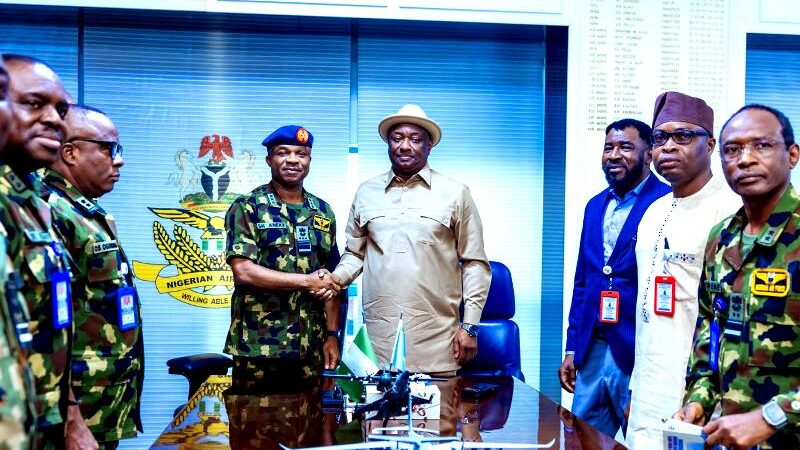
The high-level stakeholder engagement, convened at the Joint Intelligence Board Hall of the ONSA, brought together senior government officials, transport regulators, emergency response agencies, and security institutions to chart the way forward for the implementation of the new reporting structure approved by President Bola Ahmed Tinubu in March 2026. Under the new arrangement, the NSIB will now report directly to the Presidency through the ONSA, ending its previous supervisory alignment with the Federal Ministry of Aviation and Aerospace Development.
The meeting was chaired by the National Security Adviser, Mallam Nuhu Ribadu, while HadizaBala Usman, Special Adviser to the President on Policy and Coordination and Head of the Central Results Delivery Coordination Unit, served as co-chairperson. Participants included representatives from the Federal Ministry of Aviation and Aerospace Development; Federal Ministry of Justice and Office of the Attorney-General of the Federation; Federal Ministry of Finance; Central Bank of Nigeria (CBN); Office of the Accountant-General of the Federation (OAGF); Federal Road Safety Corps (FRSC); Federal Roads Maintenance Agency (FERMA); Nigerian Railway Corporation (NRC); National Inland Waterways Authority (NIWA); Nigerian Ports Authority (NPA); Nigerian National Petroleum Company Limited (NNPC Ltd.); Nigeria Civil Aviation Authority (NCAA); Federal Airports Authority of Nigeria (FAAN); Nigerian Airspace Management Agency (NAMA); Nigeria Police Force (NPF); National Emergency Management Agency (NEMA); the Armed Forces and Air Command; alongside other relevant agencies.
Stakeholders at the meeting described the reform as a strategic response to the increasing complexity of transport-related occurrences and emergencies, many of which now intersect with national security concerns, infrastructure protection, emergency response coordination, and intelligence management. They noted that the new framework reflects a broader national effort to strengthen institutional coordination and improve the country’s capacity to respond to major transportation incidents.
Speaking during the engagement, Director General of the NSIB, Captain Alex Badeh Jr., described the transition to the Presidency as a major institutional development that would strengthen investigative transparency, operational independence, and inter-agency collaboration.
“Our responsibility remains preventive, not punitive. The Bureau determines probable causes of accidents, identifies systemic safety gaps, and issues recommendations aimed at preventing future occurrences. We do not regulate, prosecute, or apportion blame,” Badeh said.
He added that the new framework would improve occurrence notification timelines, evidence preservation, and coordinated response during investigations involving multiple authorities or incidents with wider national security implications. Badeh also referenced operational challenges encountered during previous investigations, including delays in data access and jurisdictional overlaps during transport occurrence investigations in late 2025 and early 2026, noting that the new reporting structure would significantly reduce such constraints.
In his address, Mallam Nuhu Ribadu said the Presidency approved the reform to eliminate bureaucratic bottlenecks, strengthen investigative neutrality, and establish a more coordinated national transportation safety framework. According to him, the ONSA would provide institutional coordination and oversight support, particularly in situations where investigations involve systemic failures or operational lapses connected to sectoral agencies themselves.
He stressed that an independent reporting structure was necessary to preserve public trust, neutrality, and professional transparency. Ribadu also disclosed that steps were already underway to amend the NSIB Establishment Act 2022 in line with the new governance framework, with the Office of the Attorney-General of the Federation expected to constitute a technical drafting committee involving relevant agencies and stakeholders.
In her remarks, HadizaBala Usman stated that President Bola Tinubu’s decision to reposition the NSIB under the Presidency reflects a more integrated institutional framework consistent with international best practices. She noted that the reform aligns Nigeria’s transport safety architecture with globally recognised investigation models such as the United States’ National Transportation Safety Board, Canada’s Transportation Safety Board of Canada, and France’s Bureau d’Enquêtes et d’Analyses pour la Sécurité de l’AviationCivile.
Among the resolutions reached at the meeting were plans to develop inter-agency standard operating procedures within 30 days, establish memoranda of understanding with agencies within 60 days, and commence the legislative amendments required to support full implementation of the new framework.
The meeting ended with stakeholders unanimously backing the reform and committing to deepen operational collaboration through structured inter-agency frameworks, coordinated response protocols, and institutional partnerships designed to support effective implementation.
For Nigeria, where transport-related accidents continue to expose gaps in emergency response coordination and safety enforcement, the new framework signals a broader effort to reposition accident investigation as a preventive national safety mechanism tied not only to transportation oversight, but also to national resilience, public accountability, and institutional trust.