NCAA Academy Underway, As Najomo Visualizes A More Digitally Driven Aviation Sector
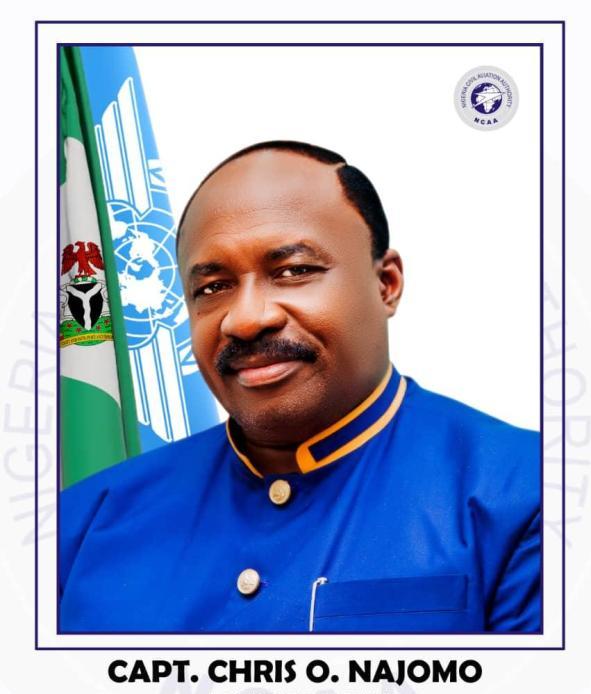
The operations of Nigeria’s 14 scheduled commercial airlines, 30 non-scheduled airlines and two cargo operators are currently being enabled by the regulatory oversight of Nigeria Civil Aviation Authority (NCAA). In this exclusive interview with AVIATION MONITOR, Capt. Chris Ona Najomo, the Director General, Civil Aviation, who has brought his 45-year industry experience to bear, highlights activities and plans of the aviation regulatory body under his watch and his perspectives on the industry.
Q: TO WHAT EXTENT WOULD YOU SAY THAT NCAA HAS REALIZED THE TARGETS IT SET FOR ITSELF IN 2025 AND WHAT ARE YOUR PRIORITIES FOR THIS YEAR?
A: The NCAA recorded significant progress in 2025, particularly in safety oversight, digital transformation, consumer protection, and certification activities. One of our notable priorities for 2026 was the ICAO Coordinated Validated Mission (ICVM) which Nigeria underwent in April, 2026. Nigeria’s strong performance which resulted in a rating of 91.4% reflected the effectiveness of our regulatory system and commitment to international standards. We also advanced the implementation of the EMPIC aviation management system. The licensing component is already operational, while work is ongoing on the Organization Approval System (OAS), which will further digitalize certification, approval, and surveillance processes, making them faster, more transparent, and more efficient.
Q. HOW MANY LOCAL COMMERCIAL AIRLINES DO YOU HAVE CURRENTLY IN NIGERIA’S REGISTRY AND WHAT EFFORTS ARE YOU MAKING TO STRENGTHEN AND EXPAND AIRLINE BUSINESS IN YOUR COUNTRY?
A: Nigeria currently has about 14 scheduled commercial airlines, 30 non-scheduled airlines, in addition to two cargo operators. Our role as a regulator is to ensure safety while creating an environment that supports sustainable growth. We have continued to improve the ease-of-doing-business through regulatory reforms and digitalization. For instance, in a bid to expand airline business, we have reduced the AOC aircraft requirement for scheduled commercial air transport from six aircraft to two. Through domesticating and enforcing the Cape Town Convention and IDERA, we have made the leasing atmosphere in Nigeria more attractive to foreign lessors.
Q. THE CURRENT GLOBAL ECONOMIC SITUATION, WHERE MOST AIRLINES ARE STRUGGLING FOR SURVIVAL, IS DEFINITELY LEAVING REGULATORY BODIES IN AFRICA WITH SOME HERCULEAN TASK. WHAT HAS BEEN YOUR EXPERIENCE AND WHAT EFFORTS ARE YOU MAKING TO ENABLE YOUR LOCAL AIRLINES NAVIGATE THE SITUATION AND SURVIVE?
A: The challenges facing airlines today are substantial. In Nigeria, the high cost of aviation fuel remains one of the most significant pressures on operators. This is compounded by exchange rate fluctuations, rising maintenance costs, supply chain challenges, and difficulties associated with sourcing aircraft parts and accessing foreign exchange for overseas maintenance activities. As a regulator, we have focused on improving responsiveness, streamlining approvals, and supporting initiatives that reduce operational bottlenecks. I must acknowledge the noble decision of our dear President Bola Ahmed Tinubu to approve a 30% discount on outstanding fees owed by domestic airlines to aviation agencies, including NCAA.
Q. WOULD YOU SAY YOU ARE DOING ENOUGH TO IMPROVE AVIATION TRAINING IN NIGERIA AS THE REGULATORY AGENCY?
A: Training remains one of the most important pillars of aviation safety. The NCAA continues to strengthen oversight of Approved Training Organizations (ATOs) and support initiatives that expand access to quality aviation training within Nigeria. Recently, we approved an additional ATO in Kano, which will increase training opportunities for aviation professionals. We are also working towards establishing the NCAA Academy, which will leverage the vast expertise available within the Authority to provide specialized regulatory and technical training programmes.
Q. MANY INDIGENOUS AVIATION PROFESSIONALS ARE LEAVING AFRICA FOR OTHER CLIMES. WHAT HAS BEEN YOUR EXPERIENCE IN NIGERIA AND WHAT ARE YOU DOING TO RETAIN AVIATION MANPOWER?
A: Nigeria has experienced the migration of aviation professionals, including pilots, engineers, CAA inspectors, and other technical specialists, largely because aviation skills are globally competitive and highly sought after. The NCAA itself has faced challenges in retaining some highly trained professionals. To address this, we have improved staff welfare, strengthened career development opportunities, and expanded training programmes. Beyond the Authority, we encourage industry stakeholders to invest more in training, succession planning, and creating attractive career opportunities that will encourage professionals to remain within Nigeria and Africa.
Q. APART FROM AIRLINES, NCAA REGULATES TRAINING INSTITUTIONS, AIRPORTS MANAGEMENT, AIRSPACE MANAGEMENT AND OTHER SEGMENTS OF THE AIR TRANSPORT INDUSTRY. WHICH OF THESE SEGMENTS WOULD YOU SAY HAS BEEN LESS TASKING FOR YOU IN NIGERIA AND WHY WOULD YOU SAY SO?
A: Every segment of the industry presents its own unique regulatory challenges. So, it would be difficult to describe any of them as less tasking. However, airport and air navigation service oversight generally benefit from more stable institutional structures and clearly defined responsibilities. Airline oversight tends to be more dynamic because operators are directly affected by economic conditions, maintenance requirements, fleet availability, manpower issues, and market competition. As a result, it often requires more intensive regulatory attention. Nevertheless, the NCAA applies the same commitment to safety and compliance across all sectors of the industry.
Q. WHAT DO YOU CONSIDER TO BE YOUR MAJOR CHALLENGE RIGHT NOW AS AN AVIATION REGULATORY BODY IN YOUR COUNTRY?
A: One of our biggest challenges is ensuring that regulatory capacity keeps pace with the growth and complexity of the aviation industry. New technologies (such as drones), increasing operational demands, evolving international standards, cybersecurity concerns, and environmental requirements all require regulators to continuously adapt. At the same time, effective oversight depends on having sufficient numbers of highly trained inspectors and technical personnel. This places significant demands on funding, training, technology, and institutional capacity.
Q. WOULD YOU SAY THAT THE CIVIL AVIATION AUTHORITIES IN AFRICA ARE COOPERATING ENOUGH?
A: Cooperation among African civil aviation authorities has improved significantly over the years. Through organizations such as BAGASOO, AFCAC, ICAO regional programmes, and other collaborative initiatives, regulators regularly share expertise, exchange safety information, and support one another in addressing common challenges. Nigeria actively participates in these initiatives because aviation safety is strengthened when regulators work together. However, there is still room for deeper collaboration in areas such as regulatory harmonization, inspector resource sharing, capacity development, and implementation of continental initiatives like SAATM.
Q. THERE ARE STILL SOME GOVERNMENTS AND REGULATORY BODIES IN AFRICA THAT ARE YET TO ENABLE FULL IMPLEMENTATION OF THE SAATM INITIATIVE AFTER SEVERAL YEARS OF SEEING THE IMPACT. WHAT ADVICE DO YOU HAVE FOR SUCH INSTITUTIONS?
A: SAATM is essential for Africa’s economic integration – Therefore, full implementation is not just an aviation reform but a core pillar of Agenda 2063 and a catalyst for AfCFTA. The benefits are proven and immediate – Countries that have opened their skies under SAATM already enjoy increased connectivity, more competitive airlines, and stronger tourism flows. All regulatory tools needed for full implementation already exist – AFCAC has provided harmonized templates for Air Service Agreements, competition rules, and consumer protection. Institutions only need to adopt and operationalize them as there is no reinvention required. SAATM strengthens, not weakens, national carriers. Fair-competition rules protect smaller airlines, while liberalization expands market access and encourages partnerships. Sovereignty over safety and security remains fully intact. Implementation is straightforward and supported. Open eligible routes, remove restrictive bilateral clauses, and align national regulations with SAATM. AFCAC, AFRAA, and regional bodies are available to provide technical assistance and capacity building. SAATM is an economic development tool . It drives job creation, tourism, trade, and investment. For landlocked and underserved regions, it is a lifeline for growth and mobility. Finally, the time to act is now. Africa cannot afford fragmented skies. Full compliance ensures that all states (large and small) benefit from a unified, competitive, and connected aviation market.
Q. WHERE DO YOU SEE NIGERIA’S AVIATION INDUSTRY IN THE NEXT FIVE YEARS?
A: My 45-year experience as an aviator drives my optimism about the future of Nigerian aviation. Over the next five years, I see an industry that is more digitally driven, more efficient, and more competitive. I expect to see stronger airline operations, improved airport infrastructure, expanded maintenance and training capabilities, and greater adoption of technology across the industry. I also see Nigeria further consolidating its position as one of Africa’s leading aviation markets and a major hub for West and Central Africa.AM