MMIA Safety Committee Takes Decisive Steps To Strengthen Airside Safety, Operational Discipline
Murtala Muhammed International Airport (MMIA) has unveiled sweeping new safety measures following an emergency-style stakeholder meeting of its Airport Safety Committee, signalling a zero-tolerance approach to reckless driving, debris hazards, and safety violations across Nigeria’s busiest aviation hub.
The Airport Safety Committee, is a group of Safety Managers from various airport stakeholders, who meet regularly to discuss safety issues and propose solutions collectively. In a decisive move, the Committee has slashed airside speed limits from 15km/h to 10km/h within the International Terminal Zone 1 construction areas, where ongoing rehabilitation of the E-Wing and D-Wing has dramatically reduced operational space. The 15km/h limit remains in effect for ITZ 2 zones. Officials confirmed that adequate signage will be installed immediately to enforce compliance.
The newly inaugurated Airside Taskforce has commenced full operations, tasked with strict monitoring of all vehicles, equipment, and personnel. Industry sources say the Taskforce represents a renewed commitment to ending years of lax enforcement that have plagued the airport’s operational areas.
In a stern warning to ground handlers, fuel marketers, and catering services, the Committee declared that drinking, smoking, and reckless driving on the airside remain strictly prohibited, with regular alcohol testing now mandated. Unserviceable vehicles will be removed, and any faulty equipment causing oil leaks or pavement damage will be impounded and fined.
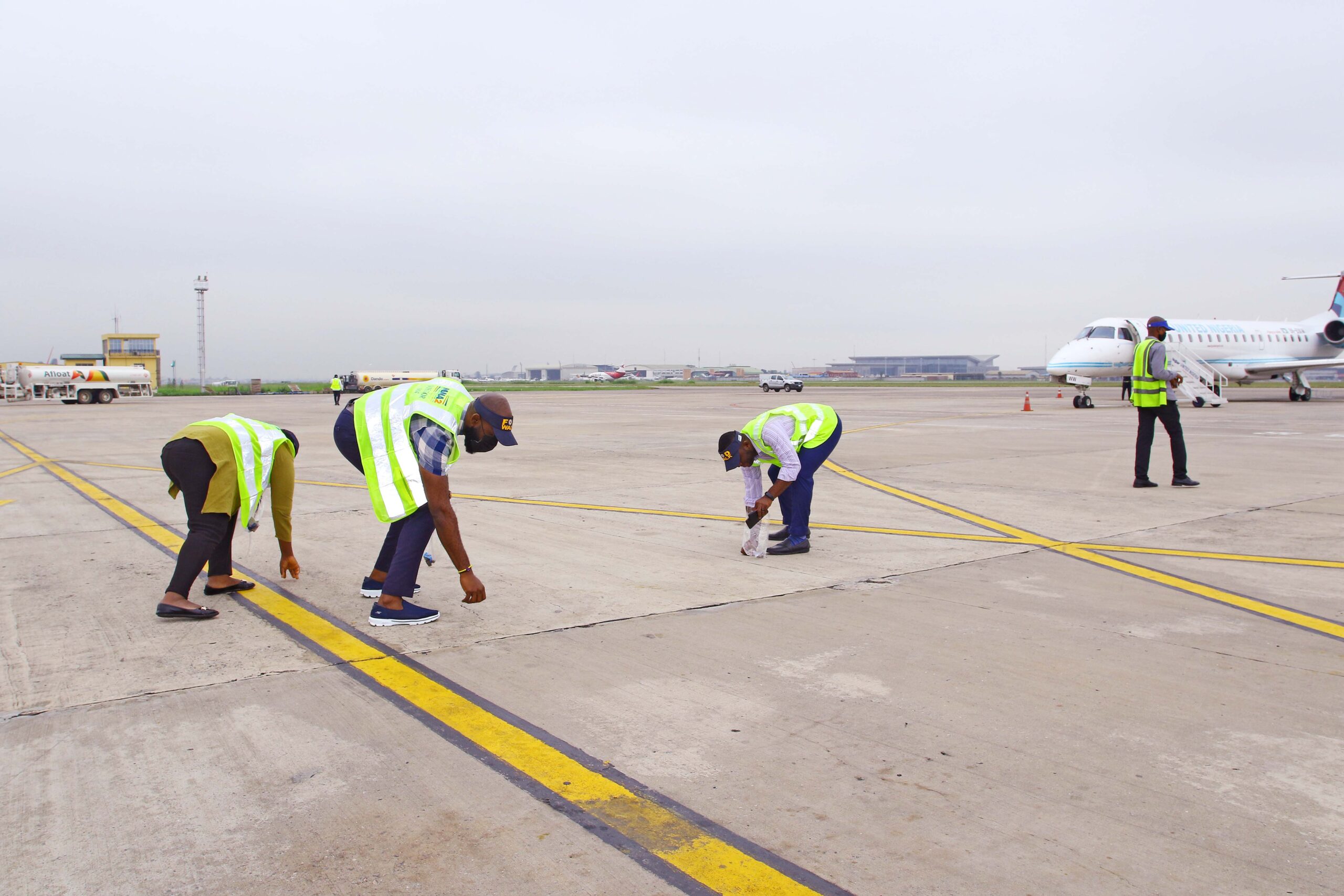
Perhaps most striking, the Committee identified Foreign Object Debris (FOD) as a critical safety concern, explicitly banning the sale of sachet alcohol drinks within the airport environment—a practice officials say has contributed to hazardous debris and operational risks.
“FOD poses a serious threat to aircraft safety,” the Committee’s communique read. “Improved housekeeping, proper waste disposal, and heightened environmental discipline are non-negotiable.”
Rising fuel and oil spill incidents, coupled with excessive refuelling by operations, have placed significant pressure on Aerodrome Rescue Fire Fighting Services’ CAT 9 coverage. Officials warned that any organization culpable will face appropriate sanctions.
On communication, the Committee reaffirmed that all airside operational communication must occur on a particular frequency, while handheld radios are barred from a certain range to prevent dangerous interference with Air Traffic Control and pilots. Approved reflective jacket standards were also reasserted: lemon green for general personnel, orange strictly for marshallers.
The Committee acknowledged ongoing congestion at arrival halls during peak periods, baggage handling delays, taxiway infrastructure damage, deteriorating road conditions, and access control issues at ramp entrances. The Regional General Manager assured stakeholders that all identified issues will be escalated for prompt resolution.
“Safety remains the bedrock of all airport operations,” the Committee concluded, calling on every stakeholder to demonstrate full compliance with all operational procedures, safety directives, and regulatory requirements.