Concession Of Conditioned Airports In Nigeria
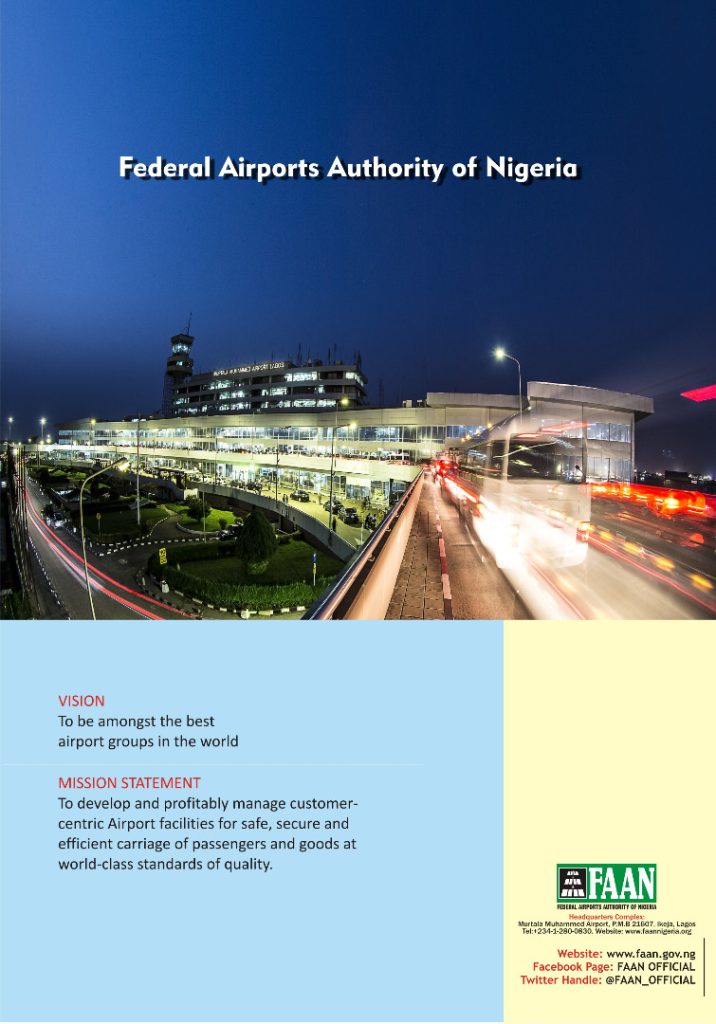
Nigeria currently has over 31 airports, most of which are operated by the Federal Airports Authority of Nigeria (FAAN) even though state governments have been constructing additional airports since 1999.
Most of the existing airports since 1977 have had profitability challenges in recent years. They include airports in Makurdi, Akure, Ibadan, Sokoto, Illorin, Calabar, Minna, Benin, Owerri, Jos, Maiduguri, Yola, Bauchi and Katsina airports.
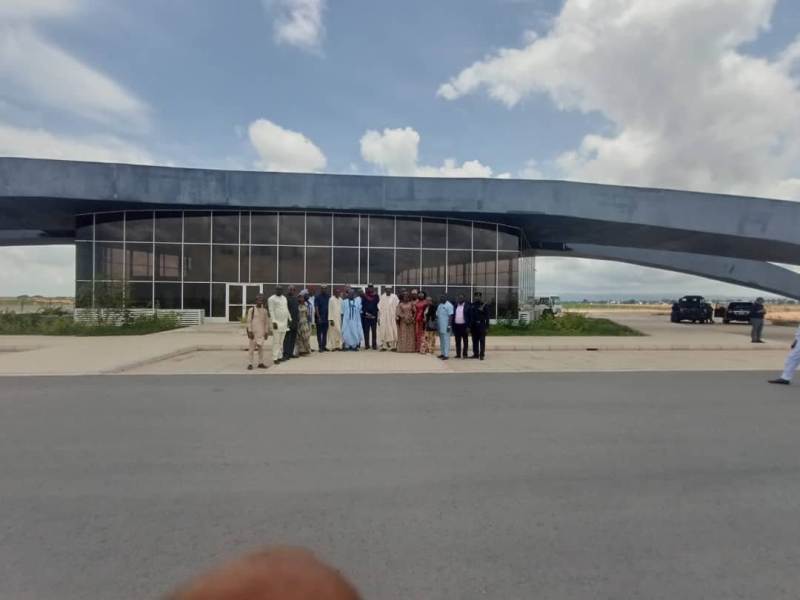
Additional airports built by state governments since 2000 include Asaba Airport in Delta State, Bayelsa, Dutse, Gombe and Kebbi airports, Anambra, Ekiti and Ogun cargo airports, among others. Some of them were eventually handed over to FAAN, due to inability to manage them to profitability, after establishing them.
As a solution, Nigeria’s federal government since 2015, announced plans to concession selected airports across the country to private concerns for management to improve their viability and profitability which they lack, and in this way, release some of FAAN’s overburdening airports to concessions.
In October 2024, Nigeria’s Minister of Aviation & Aerospace Development, Festus Keyamo (SAN) declared that five Nigeria’s airports were ready for concessioning, namely Akanu Ibiam International Airport, Enugu, Mallam Aminu Kano International Airport, Kano, Nnamdi Azikiwe International Airport, Abuja, Murtala Muhammed International Airport (MMIA) in Lagos and Port-Harcourt International Airport.
However, following information that the ministry had received approval from the Federal Executive Council (FEC) to concession the Enugu airport, aviation unions in Nigeria held a protest in August 2025, insisting that the process of airports concession by government should either be done transparently or cancelled. They emphasized on “resolution of all labour issues before delving into concession.”
Speaking at the freedom square at FAAN’s headquarters during a protest in August 2025 after the union’s congress, the union leaders described the exercise as “a deceit without carrying the workers along.”
Addressing workers, President of National Association of Air Transport Employees (NUATE), Mr. Ben Nnabue requested that “the labour issues must be discussed and handled,” adding that “we have also requested that to cherry pick the airports is not the best because the rate value picked from one airport is being used to better another airport.”
The Chief Operating Officer of Ibom Air and former Manager of Cape Town International Airport, George Uriesi emphasized the need for government to be decisive on the Public-Private-Partnership (PPP) model of airport development that needs to be deployed to make Nigeria’s airports profitable in the near future.
Christophe Pinnick, Managing Director of Asaba Airport which has been totally handed over to his organization by Delta State Government under a 30-year concession agreement, to be privately managed for first four years before review, said “to think you can make money or be profitable with two passenger flights per week on scheduled service is not possible.” He called for repositioning of airports in a way that attracted investment, using PPP arrangements.
FAAN’s Managing Director and Chief Executive, Mrs. Olubunmi Kuku has said that each challenge facing Nigeria’s aviation sector including the airports, represents a potential investment awaiting realization and should be perceived as opportunities,” adding that “from our colonial beginnings to our current status as West Africa’s largest aviation market, every milestone narrates a story of determination and opportunity.”
She said in 2024, “over 16 million passengers traversed our domestic terminals, while international passenger numbers exceeded 3.5 million. These figures are indeed impressive. Yet, there remains substantial potential for growth.”
On August 3, 2025, Nigeria’s FEC approved US$712 million for complete rehabilitation and modernization of MMIA, Lagos Terminal One. Minister Keyamo said the financing of the reconstruction “will not be done by a loan from anywhere, but by the Renewed Hope infrastructure Development Fund, which is one of the gains made from the removal of subsidies,” on oil. He also stated that revenue from MMIA has over the years, been used to subsidize other airports across the country.
Stakeholders are looking forward to government’s next step on earlier announced airports concession and definite decisions on the country’s airports development plan.