A Necessary Step: The Unvarnished Truth Behind The FAAN Cargo Tariff Adjustment
As the February 2nd implementation date for the revised air cargo tariff took effect, a coordinated campaign of misinformation and intimidation threatened to derail a critical national reform. The narrative, aggressively pushed by certain agent unions in Lagos, paints a picture of an insensitive Authority imposing unbearable costs; But when one scrapes away the emotional rhetoric and examines the cold, hard facts, spanning nearly two decades, a very different and far more compelling story emerges. This is a story not of imposition, but of a long-overdue legal, economic, and essential correction for Nigeria’s future.
THE 18-YEAR FREEZE AND THE NON-NEGOTIABLE ARITHMETIC
At the heart of this issue is a simple, staggering number: 18 years. Since 2008, the Federal Airports Authority of Nigeria (FAAN) has charged N7 per kilogram for the use of essential, shared national airport infrastructure. This stagnation occurred while Nigeria’s inflation soared by approximately 287% and the Naira depreciated from about ₦118/$1 to over ₦1,450/$1— an over 1,000% increase in the cost of critical, imported safety and security equipment.
The mathematics and the law are inescapable. Based on official data, a service costing N7 in 2008 should cost about N27 today merely to maintain parity. Therefore, the new international port charge of N20 per kg represents a 186% increase, not the inflated 257% figure being circulated and remains below the inflation-adjusted benchmark. This principled adjustment is not optional. It is a fundamental requirement of FAAN’s statutory obligations to ensure cost-related charges for safe, secure, and compliant operations.
A DAY OF ATTEMPTED SABOTAGE AND A FIRM RESPONSE
The truth of the resistance is even uglier than the rhetoric. On the very first day of implementation, a notably troublesome faction of agents attempted to physically disrupt operations at a major terminal. Their target was not the Authority, but the compliant, law-abiding agents who were dutifully adhering to the new legal tariff. By trying to block and intimidate their own colleagues from conducting lawful business, these agitators deliberately threatened safety, security, and order within a critical national asset. This tactic—thriving on chaos—was thankfully and professionally contained by the swift action of FAAN security and the Nigerian Customs Service (NCS) on the ground. This willful attempt to create a security incident has been formally reported to the appropriate authorities for decisive action to deter such aggression. It must be made unequivocally clear: such behavior will not be tolerated.
Compounding this is the desperate tactic of falsely informing the press that the Authority had cancelled the tariff increase. To what end? This disregards the established legal and administrative processes that would govern any such decision. We urge the compliant majority of agents and freight forwarders to continue their lawful operations with confidence.
INVESTING IN TANGIBLE REFORMS: WHERE THE REVENUE GOES
This adjustment is the financial foundation for systemic modernization already underway—reforms that directly benefit every stakeholder and carry significant operational costs. The Directorate of Cargo Development & Services (DCDS) has delivered foundational improvements that demonstrate responsible governance and justify the need for sustainable funding:
Governance & Compliance: The development and implementation of Standard Operating Procedures with Ground Handlers and Service Level Agreements with Airlines and government agencies require extensive legal and administrative resources to ensure industry-wide efficiency and fairness.
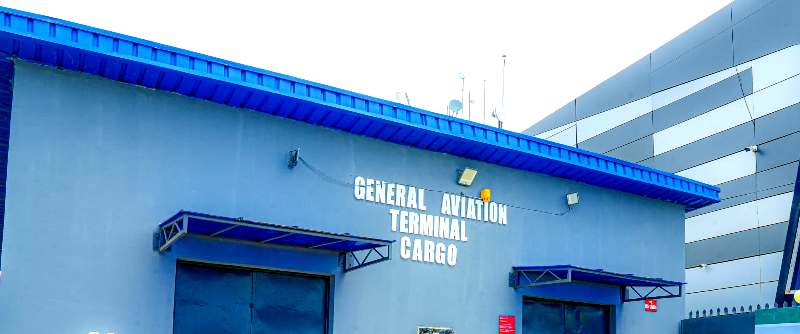
Infrastructure Reactivation: The total rehabilitation and operational restart of a previously abandoned Domestic Cargo Warehouse involved direct capital expenditure, creating immediate additional capacity for domestic trade.
Security & Verification: A comprehensive biometric access documentation system for all private cargo stakeholders, with verification tied to regulatory bodies (NCAA, CRFFN, NCS), represents a direct investment in technology and personnel to secure the terminal environment.
Strategic Expansion: The completed design for a new dedicated Domestic Cargo Terminal at Abuja Airport—where none currently exists—is a landmark initiative set for construction in 2026. This will unlock the capital’s air trade potential, alongside many other planned cargo initiatives nationwide.
Planned Critical Upgrades: Finalized plans for the Lagos Cargo Terminal Road rehabilitation (2026 implementation) and a dedicated Cargo Terminal security personnel plan are designed to resolve the chronic congestion and access issues long decried by operators.
These are not abstract promises but completed and planned projects with real costs. The revenue from this tariff review ensures these essential improvements continue and that future critical investments—like a digital Cargo Community System, enhanced perimeter security with modern scanners, and a Truck Call-Up System to eliminate terminal gridlock—can be funded and implemented.
A SYMPHONY OF CONSULTATION AMIDST INTERNAL DISCORD
Claims of a lack of consultation are a persistent distortion. Since its inception, the DCDS has engaged in well over 6 formal and informal meetings with a broad spectrum of stakeholders— Custom licensed agents, airlines, ground handlers, terminal operators, and the various agent bodies.
This process was undertaken despite well-known internal fracturing within the agent associations. It is a critical fact that one of the principal factions within these unions is, and has been, aligned with the Authority on the necessity of this increase. The primary contention has not been the tariff itself, but an internal power struggle over recognition. The Authority has engaged in good faith with multiple groups, but it cannot be held hostage to indefinite internal politicking. The national interest mandates that we proceed.
A pointed question must therefore be asked: Which of the other factions is now claiming a cancelled meeting? And which continues to distort the agreed-upon increase to N25, when the move to N20 was clearly, repeatedly, and transparently communicated?
THE REAL COST OF “BUSINESS AS USUAL”
While protesting this first review in 18 years, these same agents conveniently ignore their own commercial realities. It is public knowledge that private terminal operators, handling companies, and the agents themselves have reviewed their own charges multiple times over the same period.
This leads to a FUNDAMENTAL QUESTION for the dissenting union representatives: Would their member agents still be in business today if they were still charging their clients based solely on their own tariff sheets from 2008? Or is there a presumption that the Federal Government, alone among all entities in the value chain, should be indefinitely bound by the economics of two decades ago?
SUSTAINABLE FUNDING A CLEAR VISION DEMANDS
The nation’s economic direction is unequivocal. The President is clear in his objective to build a trillion-dollar economy. In direct alignment, the Minister of Aviation established the Directorate to boost exports via air, a mission consistently championed by the Managing Director/Chief Executive of FAAN through the “Airport for Exports” agenda.
The mandate is to realize this ambition, not to stifle it. The truth is that without this essential tariff adjustment, the very infrastructure and systemic reforms needed to make Nigerian air cargo efficient, secure, and globally competitive will stall. The modest port charge is a small investment to prevent the far greater cost of inaction: chronic congestion, unsafe roads, and an unreliable system that drives business away from Nigeria.
CONCLUSION: THE CHOICE FOR PROGRESS
The timeline speaks to collaboration: formally approved in mid-2024, implemented elsewhere in October 2025, and paused only in Lagos for further dialogue at the agents’ own request—a good-faith gesture now twisted into a weapon.
The facts present a straightforward choice: continue funding the documented, tangible reforms that modernize our ports and support a trillion-dollar economy, or capitulate to a campaign of distortion and intimidation designed to preserve an unsustainable status quo.
This is not merely about N20 per kilogram. It is about choosing a future where Nigerian trade thrives on efficient, world-class infrastructure, or accepting continued decline and disorder. The path of progress, transparency, security, and national interest is clear.