Aircraft Pilot Makes Your Trip Safer Than A Car Driver
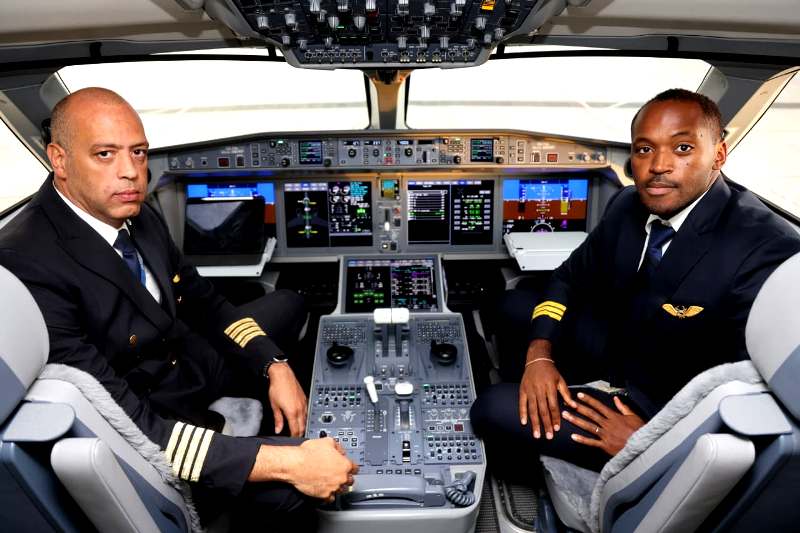
If you want to understand why our roads kill and our skies are safe, look closely at two men: the pilot in the cockpit and the driver behind the wheel.
Both men carry human lives in their hands. Both men are trusted with fathers, mothers, children, and the future of families.
Both men operate a machine that can either take people safely to their destination or turn into a coffin.
Yet the difference between them is not the machine. It is the mind. The mind is everything.
The pilot is a product of discipline. Before he ever touches an aircraft, he spends years in training. He studies the weather, the engine, the human body, emergency procedures, and the law of the air.
He passes written exams, oral exams, medical exams, and simulator tests. Even after he becomes a captain, he is tested again and again. His licence is not a right, it is a privilege that can be taken away in one minute of carelessness.
The driver, on the other hand, is often a product of chance. Many learn to drive in two weeks from a friend, a brother, or a motor park. Some have never entered a driving school. Some bought their licence without ever sitting for a test.
They know how to move the vehicle, but they do not know how to manage the road.
They know the accelerator, but they do not know the responsibility associated with it
Consider how they begin their journey. A pilot will never take off without a pre-flight check. He walks round the aircraft. He checks the fuel, the oil, the tyres, the wings, the lights, the instruments. He listens to the engineers. He reads the weather report. If one single light is not working, if one tyre is worn, if the weather is bad, he will cancel the flight.
He will tell 200 angry passengers, “We cannot fly today.” He would rather disappoint them than kill them.
The driver does the opposite. He wakes up, enters his vehicle, and starts the engine.
He does not check his Battery, Lights, Oil, Water, Brakes, or Tyres the BLOW.
He drives with a bald and bad tyre, a faulty brake, a cracked windscreen, and no wiper, and he says, “God will protect us.”
He puts his faith in prayer where the pilot puts his faith in preparation. Prayer is good, but prayer without preparation is presumption.
Consider speed. A pilot does not decide his own speed. He obeys the Air Traffic Controller. He flies at a prescribed altitude and speed. If he disobeys, he will be reported, grounded, and punished.
There is no “I am in a hurry” in the sky. There is no overtaking anyhow in the sky.
The driver believes the road belongs to him. He speeds because he wants to make one more trip. He overtakes on a bend, on a hill, on a bridge, because he wants to show that he is a sharp driver.
He forgets that speed thrills but kills. He forgets that the difference between 80 km/h and 140 km/h is not just time, it is life and death.
Consider alcohol and fatigue. For a pilot, alcohol is a taboo. He cannot drink 12 hours before a flight. He is tested randomly. If he is found with alcohol in his system, his career is finished. He also has mandatory rest. He cannot fly if he is tired.
The system protects him from himself.
For the driver, alcohol is a companion. He stops at a joint, takes “one for the road,” and believes he can control himself. He drives for 15 hours without sleep, chewing kola nut to stay awake, and calls himself a strong man.
But a tired driver is as dangerous as a drunk driver. The body does not negotiate. When sleep comes, it comes sometimes on the steering, at 120 km/h, with 18 passengers.
Consider passengers. A pilot counts every soul on board. He knows the weight and balance of his aircraft. He will not carry one extra passenger. If the aircraft is meant for 150, it will carry 150, not 151. He ensures everyone wears a seatbelt for takeoff and landing.
The driver overloads without conscience. A vehicle meant for five carries nine. A bus meant for 14 carries 22, with goods tied on top and a child sitting on the engine.
He does it for money. He sells human life for N500 extra fare. And the passengers, who should protest, keep quiet because they too are in a hurry.
Consider maintenance. An aircraft is grounded if it misses service by one day. The engineers sign, the records are kept, the black box records everything. If a pilot makes a mistake, the world will know.
A vehicle in a driver’s hand can go for two years without service. The driver patches it with wire and hope. There is no black box.
When a crash happens, we blame the devil. We blame witches. We blame Ember Months. We never blame our own negligence.
My opinion, therefore, is this: The pilot is safer not because his machine is better, but because his culture is better.
He has a culture of safety. The driver is dangerous not because his machine is worse, but because his culture is careless.
If we want our roads to be as safe as our skies, drivers must begin to think like pilots. A driver must see himself as a pilot on the ground. His steering is his cockpit. His passengers are his souls. His vehicle is his aircraft. His road is his sky.
A pilot does not say, “Let us manage.” A pilot says, “Safety first, no shortcuts.”
Until drivers adopt that pilot mentality check before you move, obey the rules, respect speed, rest when tired, refuse alcohol, refuse overload, our roads will continue to be killing fields, while our skies remain safe heavens.
The road does not kill. The sky does not save. It is the man in control that decides.
Let us all learn to “fly” safely on the ground
COPIED FROM SALAMI (Photo is from TAAG Angola)