How To Enhance Mobility, Cargo Movement, Maritime Security In Nigeria
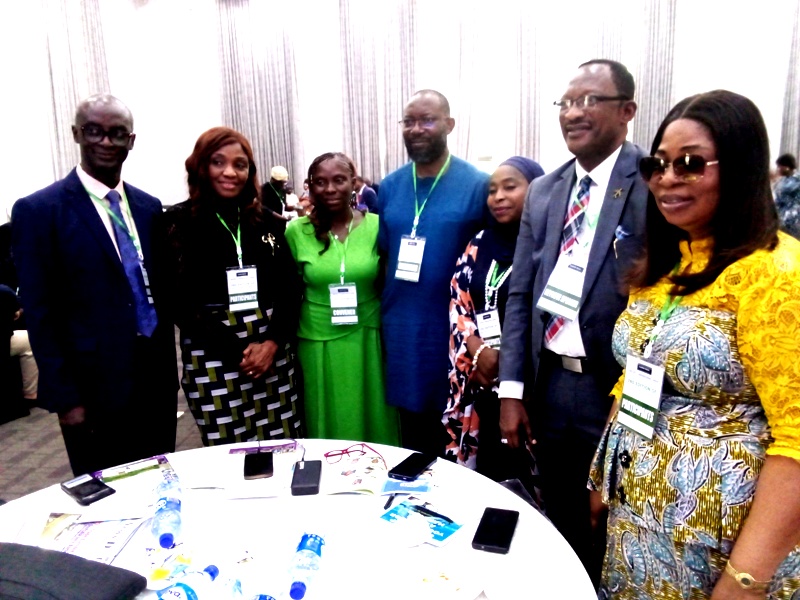
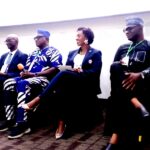
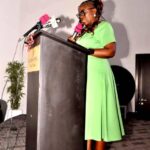
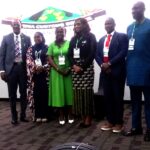
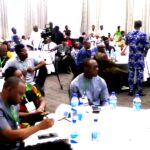
Measures required by both government and private sector to enhance mobility, cargo movement and maritime security in Nigeria constituted the focus of discussions by two panels at the 2nd edition of Nigeria Transport Summit organized by JustAlive Communications at the Providence Hotel, Lagos.
Theme of the summit was “Navigating Global Disruption And The Road Ahead: Mobility, Energy And Trade Facilitation For Resilient Future.”
Discussants had a consensus that appropriate government policies were required to enhance mobility, cargo movement and maritime security across the country.
Speaking for airlines, Mr. Benedict Oluwafemi of Aero said one of the robust ways to address effect of current global disruptions on the transport sector is to ensure airlines are profitable. This he said can be achieved through government–airlines partnership.
The Managing Director and Chief Executive Officer of Pathfinders International Limited, Mrs. Nkechi Onyenso advised that government in making policies, should collaborate with the private sector since the private sector is critical in policy implementation. She further said good collaboration and partnership in intended transport sector investment should ride on the back of corporate governance.
“The system has to be fair. There has to be integrity in preparing the books. The project embarked on has to be viable and sustainable so as to attract investment,” she said.
According to Onyenso, transparency, fairness and accountability by all parties will help to attract foreign investors. There should also be mutually beneficial partnership for the sector to work.
The General Secretary of Aviation Safety Round Table Initiative (ASRTI), Mr. Olumide Ohunayo said contrary to some assumption that government should be left to address disruptions, “addressing any disruption cannot be left to government alone even though government leads the process. You must involve the private sector.”
On the sector’s challenges, the Managing Principal of AZ Logistics, Dr. Azeez Mustapha said “our challenge in the rail sector is implementation of policies. The rail sector needs to work perfectly for other modes of transport to work well.”
The Chief Executive Officer of Expedite Movers Nigeria Limited, Oluwabowale Iseoluwa Ade-Onojobi suggested that each region in Nigeria should develop their rail systems to ease the linkage. She also stressed the need to build rail services in Nigeria rather than merely building railways without quality service orientation by personnel in the organizations.
Still on policy implementation, the publisher of MMS Plus Newspaper, Mr. Kingsley Anaroke noted that most rail lines in the country have over the years, been developed based on political considerations rather than appropriateness.
“This year, N240 billion was budgeted for the rail sector, 2026. This is October and implementation is yet to be seen,” he said, adding that states should be able to develop rail on their own.
He said political will is needed to connect isolated ports to overall logistics while planning is needed with strategic design involving upgrade of facilities in line with changing trends.
“Inter-modalism should mean cheaper transport for users. Sea ports should also be connected. They should not just be built without connection,” he said.
Most goods movement in Nigeria occur from the south west to the south east by road transport. Mr. Shittu Oladimeji, who represented the Special Adviser To Lagos State Governor on Blue Economy said this movement of goods from hinterland to the cities by road, requires better infrastructure and improvements of road safety.
Making a case for the adoption of technology locally to improve transport services rather than copying models that do not suit our environment, he said the Lagos State government already has an integrated platform for payments for BRT or rail transport.
In his intervention, the chairman of the summit and Executive Director, Operations & Technical, Tantita Security Services, Capt Warredi Enisuoh noted it is important to invest in the rail system and that government and security agencies should not work in silos. He disclosed that a document was recently signed, bringing Tantita, the Nigeria Navy, Nigeria Security & Civil Defence Corps, Nigeria Police and other agencies together to work as a team in providing maritime security but that it took over three years to get the document signed.
Participants also suggested that each state government should construct a railway, running through the state while the next state continues from where the other state stopped until a single railway runs through the entire country.
They also suggested that a port be established in the eastern Nigeria to reduce cost of moving goods by road from other parts of the country to the east.