Technical Staff Allowance Now More Than Directors Generals’ Allowance, Says Gambia CAA
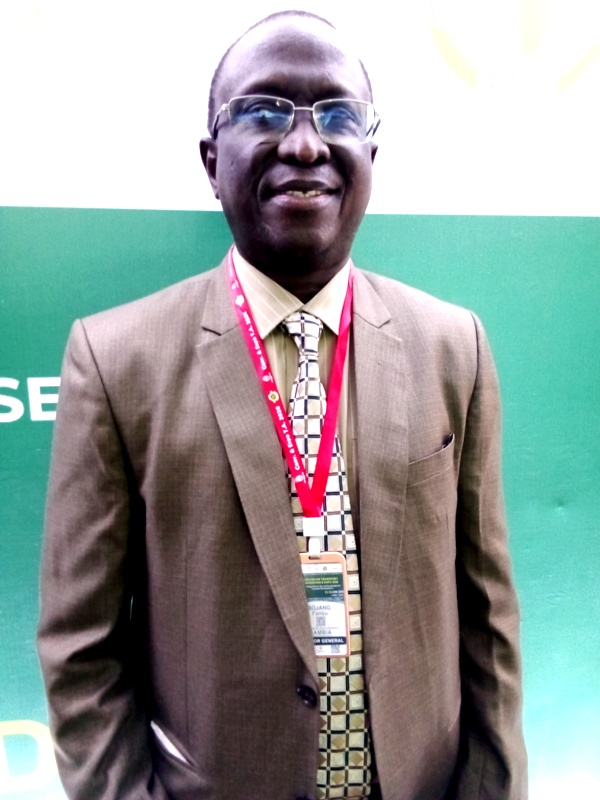
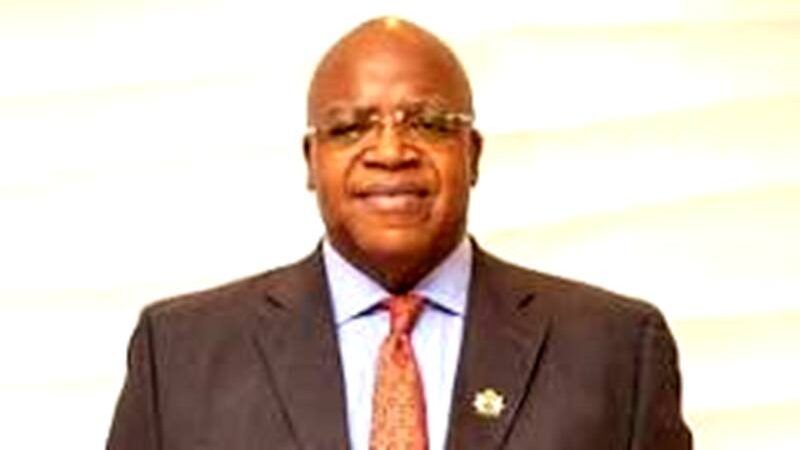
The Director General, Gambia Civil Aviation Authority, Mr. Fansu Bojang in this exclusive interview with AVIATION MONITOR, explains his country’s response to exit of African aviation professionals from Africa for better work conditions outside the continent and other targets of his agency.
Q: MANY INDIGENOUS AVIATION PROFESSIONALS ARE LEAVING AFRICA FOR OTHER CLIMES. WHAT HAS BEEN YOUR EXPERIENCE IN YOUR COUNTRY AND WHAT ARE YOU DOING TO RETAIN AVIATION MANPOWER?
A: That is something the whole industry is grappling with really but I think it is more severe in Africa because of our generally low packages compared to the rest of the international community. In Gambia, we also recognize that because we have lost some of our trained pilots from Flight Safety Department to the industry. What we have decided as an institution and as a country to do is that we have created a special professional allowance for the staff in the Flight Safety; not only in Flight Safety, Air Traffic Control also. The whole technical staff have been granted allowance to a level that their salary is more than that of the Directors General or comparable. Though that is still below what the industry is, but it is an incentive for them to appreciate that they are valued and are significant to the state. Compared to what their colleagues are getting, they know that they have been put on a higher pedestal. Because of that, I think we are able to hold on to them for now. That is not the end. We are making further proposals to see how the wage package can be reviewed to be guaranteed that we hold them together. There is no point spending so much. It is so expensive to train one pilot. At the end of the day, you lose them. So, we will basically be subsidizing the industry.
Q: ARE YOU MAKING ANY EFFORTS TO ATTRACT MORE YOUNG PEOPLE AND GET THEM INTERESTED IN AVIATION CAREERS?
A: We have created a pool of what they call cadets; not only young people. We have a special focus on girls. For the first time, a few years ago, we had female ATCs. That was the first in the Gambia and we really used her as the face of ladies in the industry. We are currently investing a lot in ladies. In the Gambia, the female population in terms of school-aged young people are more than the boys. So, we don’t only invest in young people. We focus on the ladies to encourage them in this industry that is traditionally a male industry.
Q: WHAT HAS BEEN GAMBIA CAA’S PRIORITY FOR 2026?
A: For me, the main priority as we started for the year was to fully get the SAATM targets off the ground. Gambia was among the first countries to sign up to the Project Implementation Programme (PIP). To get that off the ground, we thought we had regional approach. One of our first steps was to domesticate points between Gambia and Senegal and the concept behind that is when we domesticate destinations between our two countries, we get and gather all the tariffs associated with international traffic and that will translate into a significant drop on the taxes charged on all tickets. I am happy that as at March 2026, that has been fully implemented. It has been a bumpy road. Like I said, it took us a few years to get there but eventually, our Presidents (Gambia and Senegal) signed up to the idea. Both countries consulted with IATA to give us the revised tariffs on the domestication of the points and this is fully up and running. So far, we are yet to do a full assessment on the cost of tickets. However, the feedback we are getting even from government travelers is that they are quite surprised at how low the tickets are now by say, between Banjul and Dakar; something that used to run to as much as $500. Now, they can find it as cheap as $200. We want to improve on that. The next stage is that we are talking to Ghana, to Nigeria. Am sure you are familiar with the Banjul Accord Group. Instead of going fully regional or continental, we thought we could do it block by block. Before we know it, we will be bringing everybody onboard; but look at the impact even. On the people’s movement between say, Banjul and Dakar, a National Bus Service in Dakar is doing about five trips to Banjul daily. The Gambia National Transport Service is doing about six buses to Dakar daily. Each of these buses carry about 50 people. If you see an ATR for example that runs between Banjul and Dakar, you are talking about almost 11 flights daily. This is not even considering those who are driving their own cars or say, small buses of seven-seater vehicles. This is just to have more people using those smaller vehicles going to Dakar than the bus service. So, we know that once the tickets become affordable, the growth of demand for air service will rise exponentially.
Q: WHAT ARE YOU DOING TO CUSHION THE EFFECTS OF THE CURRENT GLOBAL OIL CRISIS WHERE MOST SERVICE PROVIDERS ARE STRUGGLING FOR SURVIVAL?
A: Unfortunately, this is like a force majeure. It is affecting not only the airlines. Nobody saw this one coming. We are all navigating our way through it. On our part, we are trying to see what we can do to alleviate the cost on the operators but obviously, we also have a benchmark because we have to run the airport at a certain level. So, its really a big struggle but what we need to say is what the politicians do. Wake up and know that some of the things responsible for these things are not helpful to the world economy at large. The mega carriers that are packing up are the lead carriers in the industry. How about the small ones in Africa? So, we all project that this thing comes to a fast end so that we all recover from the fuel crisis.
Q: WHAT DO YOU CONSIDER TO BE YOUR MAJOR CHALLENGE RIGHT NOW AS AN AVIATION REGULATORY BODY IN YOUR COUNTRY?
A: For us right now, the major challenge really is in investment in infrastructure. We are in developing countries where passenger figures are not enough to break even in terms of operations. Then, you continue to operate below the line and that leaves you with zero dollar to invest, expand or maintain your infrastructure or equipment. So, most of the time, we have to rely on government intervention or subvention and you know the government’s plate is full. Sometimes, it might come. So, we have to resort to borrowing from commercial banks to make key interventions to ensure we are operating a safe and secure airport at all times. So, investment is critical and infrastructure and equipment. Also, availability of adequate human capital and independence of the regulatory body is critical. Fortunately, we don’t have issues with that but generally, I think our main key is struggle with investment and work to get investment.
Q: WHERE DO YOU SEE GAMBIA’S AVIATION INDUSTRY IN THE NEXT FIVE YEARS?
A: In the next five years, I hope we would have doubled our traffic. That is our target and we would have expanded our infrastructure and built some new ones, make it more viable and hopefully, have a national carrier in place.AM