United Nigeria Airlines Unfolds Massive Routes Expansion Plans
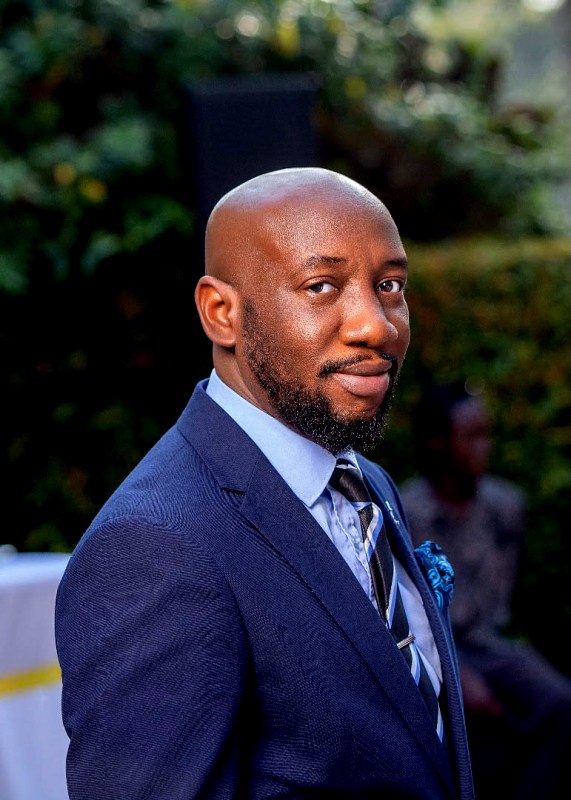
The Chief Commercial Officer of United Nigeria Airlines, Mr. Adedayo Olawuyi says the airline, which currently has one regional service to Accra in Ghana and operates to 15 destinations across Nigeria, is repositioning itself for massive routes expansion and overall growth.
Speaking at an interactive session today with members of the League of Airports & Aviation Correspondents (LAAC), Olawuyi said “we have just acquired some aircraft and we still have more on the way. Our plan is to grow within the region and also internationally. In the short term, we are looking to increase our presence in West Africa, starting with routes such as Monrovia, Banjul, Dakar, Abidjan, and Conakry. I am sure you also read about the partnership with Guinea-Bissau. So, there are plans for us to set up an airline there, which will help us increase our fleet presence in West Africa. In Central Africa, we are looking at Douala and Libreville, and further down, at Johannesburg, South Africa. Despite the attacks, we will continue to look at South Africa, because it’s about more than the issues happening today. It is about trade between the two countries. Those are our plans on the regional and African front.
We are also looking at the UK, the US, Canada, Turkey, Dubai, and Saudi Arabia. Those are the things we have planned for the next six to 24 months in terms of expansion. All of this is subject to aircraft delivery, regulatory approvals, and obtaining foreign operator or foreign carrier permits, depending on the country; but for all of those destinations, we have already started the process, and for some of them, we are already very far along.”
Olawuyi said the airline has “already begun some interline partnerships with local and international carriers, which I would rather not name now but as we finalize them, we will announce them, all aimed at finding the best ways into this market. There are some markets we can’t enter on our own; maybe because of high competition, or because traffic numbers aren’t enough to justify our own direct flight. So, we are looking at partnering with a few airlines within the country and across West Africa and the rest of the continent to help fast-track this, as well as for the international destinations. Even on routes like Canada and the US, we might start with a code-share before launching our own service. As for other companies in the value chain, if we’re unable to acquire our own aircraft, we can opt for a lease instead, which will also help us achieve our goals faster. Cooperation is definitely one way that will help us achieve our goals.”
Speaking on the challenge with the Nigerian market and travel, he said: “The challenge we have in the Nigerian aviation space today, where we are dominated by foreign carriers, is the lack of strength among our domestic carriers. What do I mean? Take Emirates, for example; a lot of people aren’t actually going to Dubai. They’re connecting to other destinations. With Qatar, how many people actually go to Doha? Ethiopian Airlines runs 35 to 40 flights a week into the country. So, the point I am making is that we’ve seen a dominance of foreign carriers because we don’t have strong domestic and regional operators and the only way to stop that dominance is to start taking the battle to their markets.
We need flights. That’s the truth. A passenger traveling to Dakar today via ASKY will first go to Lomé. From Lomé, they’ll probably connect to Abidjan, and from Abidjan, maybe to Banjul, before eventually getting to Dakar. Why can’t a Nigerian carrier offer them a direct service from Lagos?
Now, the challenge you’ve seen with carriers is this: when you bring in a 737, a 150- to 160-seater aircraft on a route with fewer than 40 passengers per day each way, it becomes unsustainable. That’s why a lot of the carriers that have succeeded in West Africa have had to adjust their operations. So, one of the things we’re trying to do is right-size for the market. Instead of just deploying big aircraft, we make sure capacity matches demand in that market. That’s one consideration.
Number two, we see a lot of market stimulation. You might look at market data today and say there’s no traffic between Nigeria and Ivory Coast, for example but if you start a flight tomorrow, you can double those numbers within 12 months. So, even though the market might seem saturated today, we expect a degree of market stimulation simply from being able to offer a direct flight. Yes, there’s a lot of competition along the West African coast, but at the same time, the fares being charged are not cheap. So the yields are good. The fares may be expensive, but the yields are good too. What usually happens is that when you start a flight and there’s a lot of competition, prices drop, which stimulates growth and gets more people flying.
Those are the things we’re basing our decisions on. First of all, our tagline is “Flying to Unite.” That’s the intention behind United Nigeria. We want to provide air transport services that unite markets, unite people, unite passions, and unite countries across the world. So we will definitely have to start those flights.”
Highlighting the challenge of transit passengers and flight connections, he said: “It can take you two hours just to connect getting from here to there depending on traffic. Or if you bring in a passenger from Douala, for example, connecting to Johannesburg, they’ll be told they need a visa to enter the country. So we are trying to address this through advocacy, and I would like to appeal to all of you to help us in any way you can with the publications we’re putting out. I am yet to see the master plan for the new terminal that’s coming up, and I believe they’re trying to address transit in that new facility as well. That will help with regional-to-regional connectivity but domestic-to-regional and domestic-to-international connectivity remains a problem.”
On the solution to airport infrastructure challenge, he said “there’s no cheap solution. It’s going to be very expensive, but it’s something that needs to be done. If you look at what’s happening in other hubs around the world, Dubai, Doha, you’ll see the multiplier effect a properly connecting airport can have for a country. So, that’s one aspect. Abuja has better options on offer. So, we are also discussing with them to see what we can do through the Abuja airport; and you’ve seen Uyo now positioning itself, saying you can fly to Uyo to connect anywhere in the world. That’s part of the ingenuity. So, we might also consider setting up a hub say, using Asaba, for example to take people farther afield. We will always have challenges. It is about coming up with the right solutions to support our business model.”
On efforts to ensure sustainability of operations, Olawuyi said: “We are the second-largest airline by capacity and traffic in the country. Only one is bigger than us for now. There’s no doubt about it.” We are trying to see how we can put proper structures in place as we start building for the next level.”
“If you see a two-story building today, and they decide to add five more floors, what’s the first thing you do? You need to strengthen the foundation. He said that’s what we’re doing now. So if you follow our trajectory, our progress, and our reporting, you’ll see we have been investing heavily in equipment and bringing in people with the experience and know-how to help strengthen our base as we build because your core is very, very important. Even as we look at these regional expansions, I must also mention that domestic expansion is far more important to us than regional expansion. You understand? That is because you need that core domestic base first. You all know how expensive it is to operate in this industry. One flight to London is going to cost you almost $200,000. Whether you carry five passengers or 200, you still have to fly. So you need a strong backbone, or a “cash cow,” to help sustain that and the lack of one is part of what we’ve seen cause other airlines to crash out in the past. So, we are very well aware of the scope of our expansion, and we are putting everything in place to ensure we have dotted every “I” and crossed every “T.”
In terms of the total number of passengers we’ve carried, what I can tell you is what we are doing now. We are averaging 120,000 to 130,000 passengers every month.”
On bird strikes impact, flight delays or cancellations and communication with passengers, Olawuyi said bird strikes have been “very bad and alarming. I remember a week in May when, for four consecutive days, we had a bird strike on our aircraft. The impact varies. Sometimes, the aircraft can still fly. Sometimes it’s grounded and needs repairs. Sometimes, it’s grounded and we need to order parts to fix it. So, the impact can be big or small, depending on the size of the aircraft and where it’s hit. One time, it hit the nose of the plane. Another time, it went into the engine. We have seen it in different shapes and sizes.
The impact is immediate- flight cancellations, delays, compensation. We have to provide refreshments, bring in engineers, and pay them. Sometimes, if it requires bodywork, you need an engineer who can sign that off. So, I might not be able to give you an exact figure right now, but that’s something we can compute internally so people can appreciate the impact. The biggest impact for us, though, is the loss of traffic because, as in the example I gave, if I lose four different aircraft out of a fleet of nine over four days in a row, it means I have had to cancel flights, issue refunds, and put passengers on other airlines.
Yes, we’re all in this industry together. All the other airlines are there and we’re friends but I don’t want to be handing my passengers to other airlines every day. At that point, I have become a travel agent, not an airline. You understand? So, that’s the biggest issue. It gives your passengers the chance to fly with someone else, and the next time, they might not come back. So, the impact can’t really be quantified that simply but we continue to work with the Federal Airports Authority of Nigeria to put better infrastructure in place for the bird migration seasons, so we can be sure of safer skies. We’re grateful that, so far, it has just been a strike and the aircraft has still been able to land. I hope we never face a major calamity because of this. That’s why it must be taken very seriously.
On communication with our passengers during disruptions, we actually communicate. In fact, we’ve been accused of over-communicating. Someone will say, “You’ve sent me five messages now about this flight.’ What we try to do if you’ve met or spoken with my Chairman, you’ll know is to prioritize transparency. He will tell you: send them a picture of the plane. Let them know. For instance, just this past weekend, I had three aircraft down with different issues. While I was trying to save one aircraft, another was stuck in Kano. He’ll tell you to send passengers every piece of information. Let them be aware. We try to communicate as much as possible, and we provide compensation in line with consumer protection rules. We follow everything to the letter. After two hours of delay, we provide refreshments, and we make announcements every 30 minutes. We try to carry passengers along but sometimes, passengers are just very, very Nigerian. They get agitated and irritated. So, we try our best to follow the rules and regulations, based on our own conditions of carriage, and we make sure that, even afterward, we still reach out to customers to keep them informed of what happened.”
“There was a time when we had a lot of challenges with baggage and equipment breakdowns but we’ve been in constant engagement with MM2, and there’s been a lot of improvement. For a while now, we haven’t had any issues with baggage. There’s constant improvement. However, there are still challenges; congestion, for one. Every airport experiences congestion at some point during the day. You understand? So, when you go there early in the morning, some days it can take 15 minutes just to taxi out, because there are five or six aircraft ahead of you. The apron is too small. It needs to be expanded. There are also times when you go to the boarding gate upstairs and the queue is so long. So, these are small things, but they add up. We all know there are peak travel times. Everyone is trying to get out early in the morning for business in Benin, Port Harcourt, and Abuja. So, flights between 6am and 8 a.m. will always have congestion issues. There are times when the queue is so long. It almost reaches outside. You understand? For these early-morning flights, you know how it is. I have a 7 a.m. flight; check-in counters close by 6:00 or 6:15; I leave two hours away. Almost everybody ends up arriving around the same time, about 10 minutes before closing. Everyone is queued up, and then you start asking, “What do we do?” You have limited resources; how many counters can you be given? and now, it seems every state has its own airline. So, there are new airlines coming up every day, and everyone is still competing for the same infrastructure. We hope to see improvement on that front, both from the federal government and from our company as well,” he said.
Commenting on the dynamics of fares reduction and passenger traffic, he explained that “overall traffic has contracted. However, that doesn’t mean our own traffic as an airline has contracted. What we’ve seen as a trend is that traffic always follows capacity: When capacity increases, seats increase, and passengers buy them. It’s a market dynamic. So, what usually happens is that as demand increases, it tends to drive prices down, and as prices fall, more people get to fly. So, for us at United Nigeria, we haven’t really seen a contraction, because, as you mentioned, we’ve been adding capacity. On that front, across the market generally, there does seem to have been a contraction. We don’t have the same number of seats in deployment today as we used to have.
So that’s one point. Number two, regarding our fleet ownership, the B737s are owned. Our expansion going forward will be a mix, based on what’s available. In fact, if you look at the airline industry today, about 50% of aircraft worldwide are leased and 50% are owned. So we’re going to stay flexible. Some aircraft will be leased, some owned, depending on availability, our financial capacity, and what suits us best for that particular aircraft type. For example, if you’re going to start long-haul service, you want to prove the concept first. You are not just going to spend N200 million buying an A330 before knowing if the route will work. So, you might decide to lease first. I’m just giving that as an example.”
On fuel prices, Olawuyi said “we haven’t seen any major decline in the cost of aviation fuel. You can verify that. It’s stayed about the same. As of December, we were buying it at about N900. Now, as I speak, it’s about N1,600 to N1,700. So, there’s still a huge difference and have ticket prices doubled? No!”
There were airlines that increased base fares, he said: “we did, at some point but market forces aren’t fully reflected in that. As new airlines come in, fares are being driven down by competition. What everyone is trying to do is apply revenue management principles to get the best possible outcome but the truth is, it’s not sustainable. It’s not sustainable for us. We’ve been buying fuel at these prices, and that’s where that 10-billion-naira figure came from. At one point, we paid as much as N3,300, and ticket prices still didn’t go up by 300%, or even 100%, in that case. We’re still selling tickets at around N110 to N120. So our prices went up, but they’ve been balanced out based on demand and supply.”