Issues Surrounding Nigeria’s Airport Concessions, By Ojikutu
The lingering crisis surrounding the concession of Nigerian airports is driven more by entrenched political interests than a lack of technical understanding of the aviation sector, retired Group Captain John Ojikutu has declared.
According to the former Commandant of the Murtala Muhammed International Airport (MMIA), Lagos, government officials are reluctant to relinquish control over airport operations because of the massive revenues generated from commercial activities, despite existing laws mandating private sector participation.
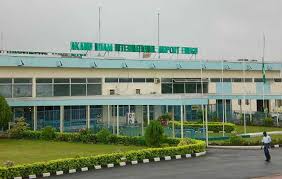
Reacting to the concession of Akanu Ibiam International Airport Enugu and the Port Harcourt International Airport, Ojikutu explained that civil aviation operations are clearly divided into two distinct categories: aerodrome services which cover safety and security and remain the statutory responsibility of the state under national and international regulations and airport services, which are purely commercial ventures meant for passengers and airport users.
He noted that while commercial services are designed to be run as businesses by private or public operators, those in government have refused to hands off the lucrative revenue streams.
Drawing attention to the legal framework already in place, Ojikutu pointed out that the Privatization, Commercialization and Concession Act of 2000, enacted during the administration of former President Olusegun Obasanjo, explicitly removed commercial businesses at airports, seaports, and telecommunications from direct government control.
He noted that this landmark legislation paved the way for private and state-led initiatives such as the Murtala Muhammed Airport Terminal Two (MM2) as well as state-owned airports in Asaba and Owerri.
Recalling the recommendations made in his 2020 book, Troubled Skyline, the aviation security expert reiterated his position that the commercial services of all federal airports, including their passenger terminal buildings should be fully concessioned.
To ensure balanced infrastructural development across the country, he proposed a model where each major international airport is bundled and concessioned alongside four domestic airports.
Ojikutu also expressed concern over the fate of the terminal reconstruction projects funded with a $500 million Chinese loan over a decade ago. Despite the completion of new passenger terminals in Lagos, Abuja, Kano, Enugu, and Port Harcourt, the planned concession of the facilities was abruptly stepped down without clear justification.
Raising red flags over recent concession announcements, Ojikutu criticized the lack of competitive bidding and transparency surrounding two airports recently reported as concessioned.
He lamented that neither the actual valuation of the assets nor the financial terms of the agreements have been disclosed to the public, questioning why anti-graft and oversight bodies such as the Independent Corrupt Practices and Other Related Offences Commission (ICPC), the Economic and Financial Crimes Commission (EFCC), and the Auditor-General of the Federation have remained silent.
Challenging the federal government’s financial accountability, Ojikutu urged the Office of the Accountant-General of the Federation to disclose the exact revenue expected to accrue to the national treasury from the concession of non-aeronautical commercial services.
He estimated that while total service charges from these commercial operations exceed N500 billion, the government should be expecting no less than N200 billion from a properly executed concession process.
Detailing the vast array of non-aeronautical operator service charges that constitute this over N500 billion revenue pool, Ojikutu highlighted four primary streams across the aviation value chain.
Under airport operator charges, he listed passenger terminal services, aircraft landing and parking fees, cargo services, car parking, tollgates, fuel sales charges from marketers, car hire operators, land and office rents, shopping malls and restaurants, airline passenger check-in counters, avio-bridges for embarking and disembarking passengers, VIP lounges, and on-duty cards.
He further noted that the commercial revenue base encompasses charges from airline operators specifically passenger ticket sales and cargo freight charges alongside cargo and passenger handling charges from ground handling operators, as well as passenger and cargo chartered flight charges collected from unscheduled domestic and international private aircraft operators.
In a related development, some stakeholders have urged the Federal Government to exercise caution and pause further airport concessions across the country, calling for a mandatory one year observation window to evaluate the performance of the newly concessioned Port Harcourt and Enugu international airports.
Following the formal handover of the Jeremiah Obafemi Awolowo International Airport in Port Harcourt and the Akanu Ibiam International Airport in Enugu to private operators, organized labour has warned that rushing to concession additional terminals without a thorough assessment could trigger widespread job losses and operational disruptions.
Industry stakeholders and union leaders stressed that while private sector investment is welcome to modernize aging aviation infrastructure, hasty implementation poses severe risks to the workforce.
”Protection of workers’ employment and existing conditions of service remains our primary concern,” they stated noting that past public-private partnership (PPP) experiments in Nigeria’s transport and power sectors often left workers stranded with unpaid entitlements or sudden retrenchments.
Although the Ministry of Aviation and Aerospace Development, alongside concessionaires like PH Airport Limited, has repeatedly assured staff that no worker will lose their job and that private investments will instead expand commercial hubs and create new employment, they maintain that only a practical one year trial period at the Port Harcourt and Enugu facilities will reveal whether private operators will honour labour agreements, maintain safety standards, and deliver promised infrastructure upgrades.
By halting further concessions for six months, the Federal Government and organized labour can establish clear performance benchmarks, verify compliance with worker-protection clauses, and ensure Nigeria’s airport reform agenda achieves sustainable growth without sacrificing livelihoods.