Former NCAA Boss Proposes What Will Help Nigerian Carriers Survive

Former Director General of Nigeria Civil Aviation Authority (NCAA), Dr. Harold Demuren has proposed what he says is required for Nigerian carriers’ survival.
Delivering his speech as a guest speaker at the Inaugural SAPTCO Lecture held in Lagos under the theme “International Aeropolitics:The Survival Of Nigerian Carriers On The London Route,” Demuren proposed policy Interventions in form of enactment of a “Fly Nigeria Act” requiring government-funded travel on Nigerian airlines, a renegotiation of Bilateral Air Services Agreement (BASA) terms and support for local airlines while protecting market share for local carriers, stating that “you can’t be wrong supporting your own.”
He also proposed building of strong loyalty programmes as “Nigeria needs a compelling domestic Frequent Flyer Programme. This is the foundation for winning premium travelers and unlocking alliance partnerships.”
Demuren equally suggests interlining and airline cooperation stating that “local interlining between Nigerian carriers should come first. Then, extend to regional partners. Ultimately join global alliances for seamless connectivity ( One World, Star Alliance, SkyTeam).”
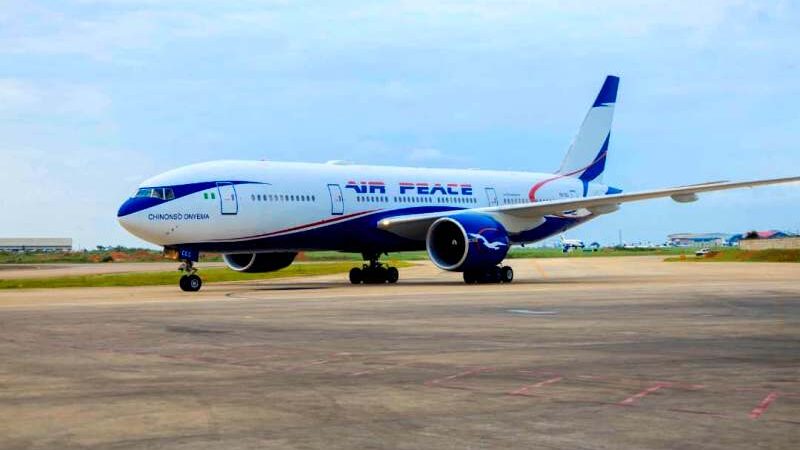
He calls for opening of new frontiers like the South Atlantic and Far East Strategy. “Nigeria–Brazil creates a new South Atlantic corridor for trade and passenger flow, like AirPeace has done, enables connection to the US without transiting through Europe. Open routes to the Far East, like China and India.”
He advises the government to assist in aircraft leasing, access to forex and timely responses in times of challenges. He adds that Nigerian carriers must earn operational reliability and regularity and at all cost, must not abandon passengers abroad. He advocates “extra friendly, courteous and polite but firm staff, creditworthiness and good corporate governance principles, IATA Safety, Security , Insurance, IT etc requirements and Clearing House compliance as well as continuity and avoidance of instability.
“Nigeria can survive in global aviation only by turning Aeropolitics into strategy, leveraging its high-value routes, building the alliances, infrastructure, and policies that allow its carriers to compete and win,” he concluded.