ASKY Targets 1.5 Million Passengers, Two New Aircraft Deliveries, Simulator In 2026

Togo based regional carrier, ASKY is looking to reach over 42 destinations within the next five years. In this exclusive interview with AVIATION MONITOR, the airline’s Commercial Director, Mr. Date D. Tevi-Benissan shares the airline’s performance, experiences amidst the global fuel crisis, Africa’s air transport industry necessities and the airline’s expectations for the future.
Q: HOW WOULD YOU ASSESS THE PERFORMANCE OF YOUR AIRLINE IN THE YEAR 2025 IN TERMS OF PASSENGER TRAFFIC AND REVENUE?
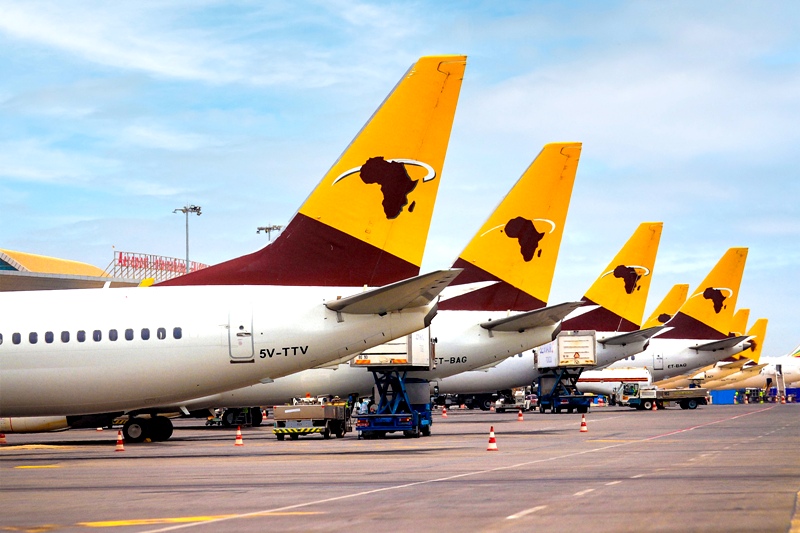
A: 2025 was a landmark year for ASKY, and it was a year we were successful enough to bring in additional aircraft to our fleet and improve our operational efficiencies. The year was marked by significant growth, industry recognition, and resilience despite global headwinds including rising operating costs and supply chain disruptions. We maintained stability in bottom line, demonstrating the strength of our business model. In December, ASKY received two prestigious awards at the 57th AFRAA General Assembly: the Distinguished Service Award for our pioneering role in the Free Route Airspace Project, and the Airline of the Year Award for Stable Financial Performance (Regional Operations). Our operations grew steadily, with the fleet expanding to 15 modern Boeing aircraft and our network reaching 30 destinations across 27 African countries, including the successful launch of Nouakchott (NKC). With our investment in passenger experience, passenger traffic increased from 1,259,119 in 2024 to 1,319,406 in 2025, while additional capacity deployed also enabled growth in cargo volumes. This performance underscores the confidence that passengers, businesses, and governments across the network place in ASKY and validates the resilience of our hub-and-spoke model.
Q: AT THE BEGINNING OF 2026, WHAT WERE SOME OF THE TARGETS THAT YOUR AIRLINE HAD AS PRIORITIES?
A: Our strategy for 2026 is twofold; to deepen our presence on key routes and to continue widening our network. This means increasing frequencies on existing routes, while exploring new destinations that strengthen regional connectivity, because one of the things that makes an airline successful is the connectivity you are creating, and on the other side, the business programme. We are also investing in critical infrastructure to support our independence and growth, including the construction of a B737 MAX pilot simulator in Lomé for training our pilots and other pilots that want to get trained. This is so that we will be less dependent on Europe and other training service providers outside the region. Our ambition is to carry more than 1.5 million passengers and increase our fleet to 17 aircraft. Success will be evaluated through a combination of financial performance, and operational milestones, such as timely aircraft delivery, customer satisfaction, operational reliability, and the successful commissioning of our in-house training facilities. Achieving these objectives requires continued investment in our people through training and skills development while maintaining constructive partnerships with all stakeholders.
Q: THE CURRENT GLOBAL OIL CRISIS HAS AFFECTED EVERY AIRLINE. TO WHAT EXTENT HAS THE CRISIS AFFECTED YOUR AIRLINE AND HOW HAVE YOU BEEN ABLE TO MANAGE AND NAVIGATE EFFECTS OF THE CRISIS ON YOUR AIRLINE?
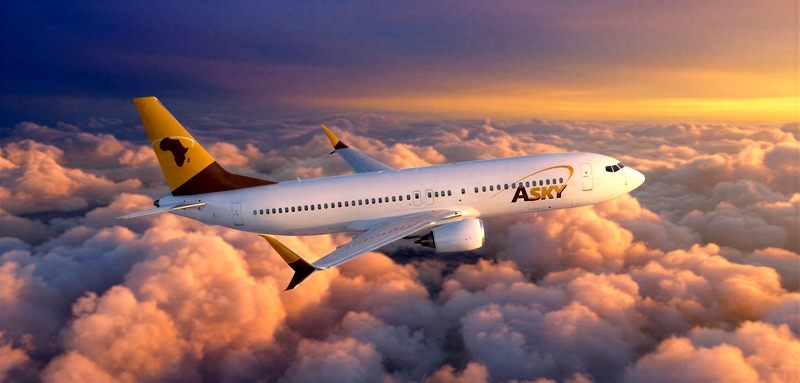
A: Fuel remains the single largest cost component for any airline. Africa’s dependence on imported refined petroleum products makes it disproportionately vulnerable to global oil price shocks, with over 70% of our fuel imported despite the continent’s crude oil production. Fuel now represents approximately one-third of our operating costs and is already 30% higher than in most other regions. The fuel price in Africa is the highest in the world. The crisis has made it worse. From 15% average in the fuel cost in our operations, it is now 30%, showing the significance of that cost on our operations. Furthermore, supply chain disruptions are adding to the pressure. To mitigate it, ASKY is relying on B737 MAX to Accra, which is more fuel efficient. ASKY has responded through disciplined cost management, network optimization, improved aircraft utilization, and enhanced operational efficiency across all business units. We are modernizing our fleet with fuel-efficient Boeing 737 MAX aircraft to mitigate costs, exploring route optimization to save fuel, and strengthening our internal controls and cost management to navigate this volatile environment while preserving service quality and maintaining competitiveness. These and other measures are helping us to navigate through effects of the crisis.
Q: CONSIDERING THE CURRENT GLOBAL ECONOMIC SITUATION WHERE MOST AIRLINES ARE STRUGGLING FOR SURVIVAL, WHAT WOULD YOU ADVICE OTHER AFRICAN AIRLINES TO DO TO BE ABLE TO SURVIVE?
A: Survival for African airlines requires a multi-pronged approach. The secret is not one thing but doing many things correctly: good governance, rigorous cost management across all procurement and strong, supportive partnerships like ASKY has with Ethiopian Airlines, which provides access to expertise and financing. Operating costs from aviation fuel to airport charges are significantly higher in Africa than elsewhere, often due to monopolies, high taxes, and fragmented policies. However, governments and policymakers also have a critical role to play. Aviation should be viewed as a strategic enabler of economic development rather than simply a source of taxation. Africa does not lack demand, nor does it lack capital. What constrains aviation growth is an overly restrictive regulatory environment, excessive taxation, and slow implementation of the Single African Air Transport Market (SAATM). Embracing liberalization would unlock economies of scale, reduce costs, and make intra-African flying more viable, ultimately benefiting connectivity, trade, tourism, and economic growth.
Q: IN RECENT YEARS, THERE HAVE BEEN SHIFTS IN DELIVERY DATES FOR AIRLINE AIRCRAFT ORDERS. DOES ASKY HAVE SUCH INCIDENT OF AIRCRAFT DELIVERY DATE SHIFT?
A: The entire aviation industry has been affected by supply chain disruptions and delays in aircraft deliveries, and ASKY has not been immune. Nevertheless, our disciplined planning and strong partnership with Ethiopian Airlines have helped us manage the situation effectively. We maintain a modern, efficient fleet that has allowed us to meet our expansion goals. In 2025, we took delivery of a new Boeing 737 MAX, and we plan to add two more aircraft in 2026, demonstrating our ability to navigate these challenges. When we receive two new Boeing 737 MAX this year, it will bring our fleet to 17 aircraft, as we already have 15 aircraft. Our diversified network strategy, operational flexibility, strong relationships with leasing partners, and robust fleet risk management approach have enabled us to sustain our growth trajectory while minimizing the impact of delivery delays. We remain committed to working closely with our partners to mitigate the impact of global supply chain disruptions.
Q: WHAT DOES ASKY SEE AS A MAJOR CHALLENGE CURRENTLY IN TERMS OF GOVERNMENT POLICIES ON ENHANCING SKIES CONNECTIVITY, AND WHAT WOULD BE YOUR ADVICE?
A: The biggest policy challenge we face is the high cost of doing business in Africa, exacerbated by complex regulations, excessive taxation, and a lack of navigational infrastructure. Governments often treat aviation as a luxury, taxing it more heavily than other sectors. Another major issue is that our revenue is in many different African currencies while our costs are in dollars or euros. We have different currencies in Africa. In Nigeria, it is naira. In Ghana, you have cedis. You have CFA somewhere else, and so on. We have to convert the money into dollars every time and add to cost of operations for African airlines. Furthermore, access to 5th and 6th freedom traffic rights is often restricted, and the slow implementation of SAATM remains a significant barrier. My advice is to embrace the vision of a unified African sky. Removing visa restrictions, harmonizing regulations, reducing excessive taxes and charges, and continuing investment in airport infrastructure would dramatically boost connectivity, tourism, and economic growth. Greater liberalization is essential if Africa is to unlock its connectivity potential and maximize the economic benefits that aviation can deliver. A more integrated continent is a more prosperous one.
Q: MANY AVIATION PROFESSIONALS ARE LEAVING AFRICA FOR OTHER CLIMES. WHAT IS ASKY DOING TO RETAIN PROFESSIONALS?
A: Talent retention is a growing challenge across Africa, compounded by a global shortage of skilled personnel. Once engineers and pilots gain international accreditation, they are highly attractive to airlines in Europe and the Middle East. To counter this, ASKY is creating an environment where professionals can build long-term careers. This means providing clear career progression pathways, investing in continuous professional development, and creating a supportive workplace culture. Our new investments in a B737 MAX pilot simulator and a joint-venture MRO center are key to this, as they will allow us to offer more advanced, in-house training and professional growth. We strive to create an environment where talented aviation professionals can build long-term careers and contribute to the growth of African aviation without needing to seek opportunities elsewhere. We believe in creating a future for our staff here, in Africa.
Q: WHERE DO YOU SEE ASKY IN THE NEXT FIVE YEARS?
A: In the next five years, I see ASKY as the undisputed leader of African regional aviation, a truly Pan-African airline and the pride of the continent. Our ambition is to expand our network to more than 42 destinations, significantly grow our fleet, and play an even greater role in connecting African economies, businesses, and people. By then, our investment in local capacity, with our own B737 MAX simulator and MRO capabilities, will have reduced our reliance on external providers and created a training hub for the region. We will have deepened our network, adding new frequencies and destinations to make travel across Africa seamless. We aim to demonstrate that African aviation can be profitable, sustainable, and a powerful catalyst for integration and development. From that solid base, we will then be positioned to expand beyond the continent to global markets, linking Africa to the world from our hub in Lomé, while remaining committed to the values that define our brand: reliability, safety, efficiency, and warm African hospitality.AM