AfCFTA: Trade Is Not Driven By Speeches, Says Former President Obasanjo
Nigeria’s former President Olusegun Obasanjo has said that for the African Continental Free Trade Area (AfCFTA) to achieve its objective of enhancing trade to advance continental economy, driving it has to go beyond speeches.
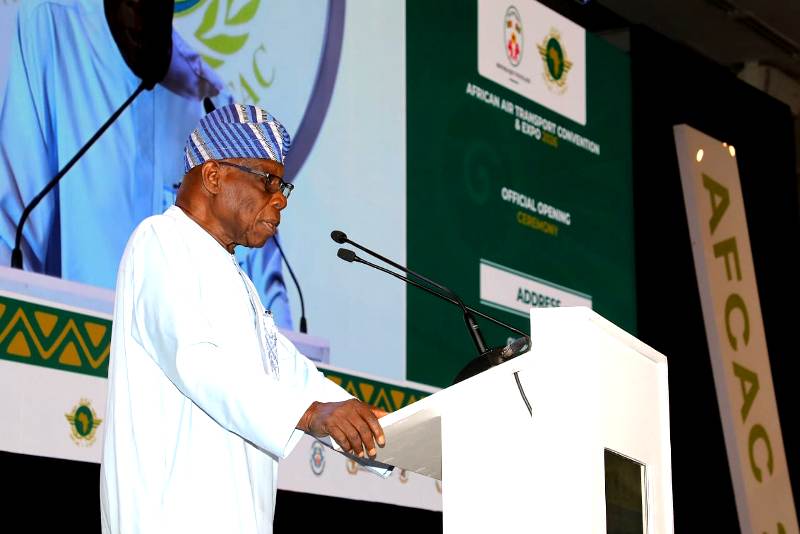
Speaking at the just concluded African Air Transport & Convention Expo held in Lome, Togo, June 15 to June 19th, 2026, Obasanjo said: “Regarding trade, I have remained dedicated to the African Continental Free Trade Area because it stands as one of the most practical tools for transforming Africa from a continent of small, fragmented markets into a large-scale continental economy. However, trade is not driven by speeches. It advances through infrastructure, logistics, standards, payments, borders, and transport.”
“For many years, we have spoken of African integration. We have created institutions, signed treaties, launched frameworks, and adopted declarations. These efforts are necessary but not sufficient. Integration must now be experienced in the lives of our people—through lower travel costs, free movement of goods, easier business procedures, increased tourism, and Africans’ ability to meet, trade, invest, and build together. Air transport is one of the clearest tests of whether Africa is serious about integration.
If Africans cannot travel easily within Africa, then AfCFTA will remain limited. If our airlines cannot connect our markets, then our businesses will stay fragmented. If our borders stay difficult to cross, our tourism will not reach its full potential. If our aviation sector is unsafe, overtaxed, underfinanced, and poorly coordinated, then the promise of Agenda 2063 will be delayed,” stating that he was speaking from personal experience.
“In Nigeria, we worked to bolster aviation regulation and institutional credibility. We understood that safety, regulation, and commercial discipline are not just technical details; they are the pillars of confidence. Without trust, there is no investment. Without investment, there is no connectivity. Without connectivity, there is no integration,” said Obasanjo.
“Regarding culture and tourism, Africa must recognize that our identity is also an economic resource. Our heritage, creativity, festivals, landscapes, cities, and people form part of our strength. However, tourism cannot expand where air access is costly, irregular, or challenging.
On mobility, I have always believed that African borders should become bridges, not barriers. The free movement of people is not a luxury; it is the human face of integration.
As an African elder, I have learned one clear lesson: peace, governance, infrastructure, and connectivity are interconnected. You cannot build corridors amid conflict. You cannot secure aviation finance without credible institutions. You cannot expand trade where trust is missing” he added.
He further counseled. “My advice to you today is straightforward. First, Africa must fully implement the Single African Air Transport Market. We must stop considering SAATM as merely a ceremonial commitment. It has to become operational within our bilateral air services agreements, route approvals, competition rules, consumer protection systems, and the treatment of African airlines.
Secondly, we must lower the cost of air travel in Africa. Taxes, charges, and fees that make air tickets unaffordable are not revenue strategies; they are barriers to growth. A passenger who cannot afford to fly generates no tax, no trade, no tourism, and no opportunity. Governments should reconsider the overall cost burden on African aviation.
Third, we must connect aviation directly to AfCFTA implementation. Every trade corridor should have a plan for air connectivity. Every tourism strategy should include an air access plan. Every regional value chain should ask: how do people, goods, and services move more quickly, cheaply, and reliably?
Fourth, we must mobilize serious financing for aviation infrastructure. Airports, air navigation systems, cargo terminals, maintenance facilities, digital border systems, and climate-resilient infrastructure require long-term capital. DFIs and technical partners must work with African governments to prepare bankable projects, not endless wish lists.
Fifth, we must make mobility easier for Africans. Visa restrictions, slow border procedures, and weak facilitation systems undermine the very integration we support. API, PNR, digital identity, risk-based security, and Annex 9-compliant facilitation should become standard across the continent.
Sixth, our airlines must also do their part. They must cooperate more, compete fairly, improve reliability, strengthen governance, and build partnerships that serve African consumers. Governments can open the skies, but airlines must use those skies responsibly.”
Obasanjo said “the question before us is not whether Africa has the tools. We have them. We have SAATM. We have AfCFTA. We have AU Agenda 2063. We have RECs. We have AFCAC. We have AUDA-NEPAD. We have financial institutions. We have technical partners. We have entrepreneurs. We have young people ready to move, trade and create. The key issue is whether we possess the discipline to carry out the implementation.
Africa does not need another beautiful declaration that gathers dust on a shelf. Africa needs decisions that cut costs, open routes, connect capitals, move cargo, boost tourism, support airlines, protect consumers, and ensure our continent functions as one economic area.
Let this Convention be remembered not only as the first of its kind, but as the moment when Africa transitioned from ambition to action.”
“Let us build an Africa where a young entrepreneur in Lagos can reach Lomé, Nairobi, Kigali, Accra, Cairo, or Johannesburg without unnecessary difficulty; an Africa where our goods move faster than our excuses; an Africa where tourism is not constrained by poor connectivity; an Africa where aviation serves trade, culture, peace, and prosperity,” he concluded.
SEE MORE PHOTOS
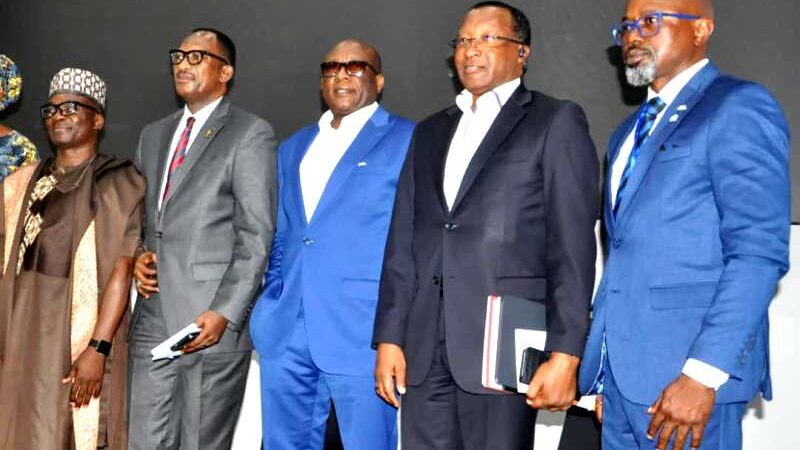
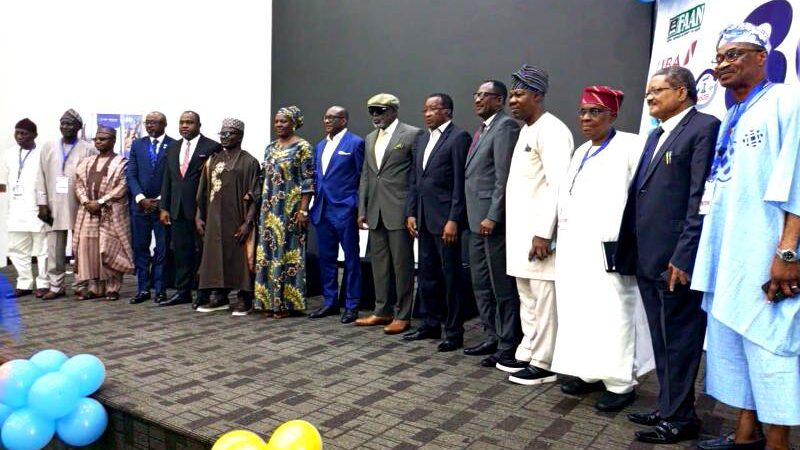
PHOTOS From African Air Transport Convention & Expo Held In Lome, Togo