
African Ministers Adopt Lomé Declaration To Make Air Transport Accessible In Africa
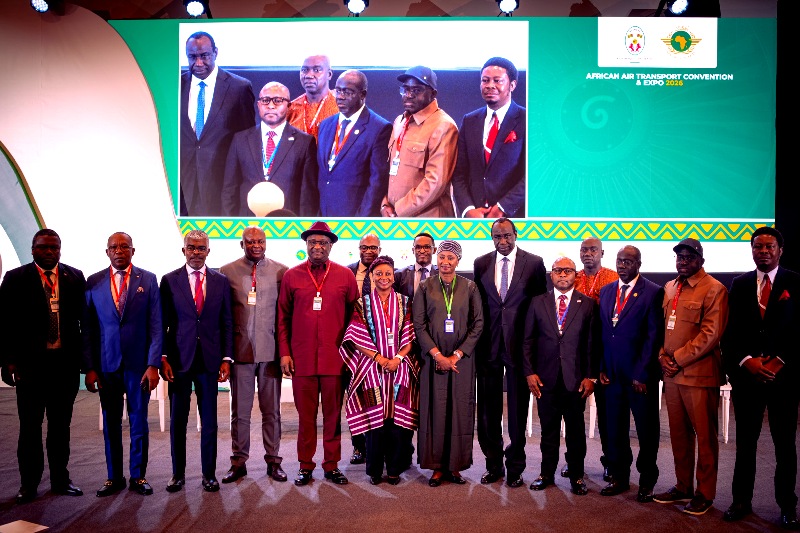
Ministers in charge of air transport in Africa have adopted the Lomé Ministerial Declaration and Implementation matrix, renewing their commitment to acceleration of the Single African Air Transport Market (SAATM) implementation, so as to reduce the cost of air transport and support a more connected, affordable and sustainable African air transport market.
At the final session of Day Two of the African Air Transport Convention and Expo on June 16, 2026, holding in Lome, Togo, African Ministers and Heads of Delegation responsible for Transport, Tourism, Trade and Finance adopted the Lomé Ministerial Declaration and Implementation matrix.
Organized by the African Civil Aviation Commission and hosted in Lomé by the Government of the Republic of Togo, the SAATM Champion State, the event is being held under the patronage of H.E. the President of the Council of the Republic of Togo, SAATM Champion President, in collaboration with the African Union Commission, the AfCFTA Secretariat and AUDA-NEPAD.
The Declaration and Implementation Matrix set out a renewed continental commitment to accelerate implementation of the Yamoussoukro Decision and the Single African Air Transport Market (SAATM).
The ministers through the Lomé Declaration, reaffirmed air transport as a strategic enabler of continental integration, trade, tourism, investment, industrialization, regional value chains and people-to-people connectivity. They stressed the urgent need to move from political commitment to measurable implementation by addressing the barriers that continue to limit the full potential of African air transport.
The Declaration also reaffirms the full and effective implementation of the Yamoussoukro Decision and the Single African Air Transport Market as a priority continental agenda for African integration and development. Ministers committed to accelerating practical implementation of SAATM at national, regional and continental levels, including through the removal of restrictive market access barriers, liberalization of air services, alignment of air services agreements with SAATM principles, and improved administrative predictability for airline designation, authorization and route commencement.
The Ministers amplified the central role of the African Civil Aviation Commission as the Executing Agency of the Yamoussoukro Decision and SAATM, and as the African Union specialized agency for civil aviation. The Declaration calls for strengthened institutional capacity and sustainable financing to enable AFCAC to support Member States, coordinate implementation, monitor progress and advance Africa’s aviation priorities.
The Lomé Declaration equally featured the launch of the AFCAC Solidarity Commitment 2026–2028, a resource mobilization initiative aimed at strengthening AFCAC’s capacity to implement its mandate, support Member States, accelerate SAATM implementation and advance continental aviation priorities. The AFCAC Solidarity Commitment provides a practical mechanism for mobilizing direct financial resourcing, technical assistance, in-kind support, capacity-building, tools, systems and project-based support in a transparent, accountable, auditable and results-oriented manner.
The Declaration demands emphatically the reduction the cost of air transport in Africa. Ministers at the event attended by heads of regulatory agencies, airlines, airport leaders, financial institution representatives and other air transport stakeholders, recognized that high aviation taxes, fees and charges, together with administrative and operational bottlenecks, increase the cost of air travel and air freight, suppress demand, weaken route viability and limit the contribution of aviation to trade, tourism and economic growth.
They endorsed the Continental Harmonized Policy Framework on Aviation Taxes, Charges and Fees as a guiding instrument for transparent, predictable, fair and growth-oriented approaches to aviation charges across Africa. They also committed to promoting coordinated action by transport, finance, tourism, trade and aviation authorities to rationalize excessive taxes, fees and charges, improve transparency and consultation, and support measures that enhance affordability while ensuring the sustainability of essential aviation services.
African Ministers committed to promoting air cargo development, corridor-based route development and priority intra-African air cargo corridors aligned with AfCFTA value chains and regional economic priorities. In support of continental trade and integration, This is to support continental trade and integration, The Declaration encourages stronger collaboration among airports, airlines, cargo operators, regulators, trade authorities, development partners and financial institutions to support sustainable route development, cargo infrastructure, market development, secondary city connectivity, data sharing and commercial partnerships.
As for air transport infrastructure and investment, Ministers recognized that modern, efficient, secure, climate-resilient and commercially viable aviation infrastructure is essential for the success of SAATM and Africa’s broader integration agenda. They called for the financing of bankable aviation infrastructure projects, including airports, air navigation systems, cargo facilities, digital systems, safety and security infrastructure and corridor-related investments.
They recognized the importance of innovation, technology and human capital and committed to promoting digital transformation, operational modernization, aviation data systems, technology adoption, innovation partnerships and capacity-building across Africa’s aviation sector. The Declaration also calls for priority attention to the Next Generation of Aviation Professionals, women and youth participation, technology transfer and stronger partnerships among training institutions, regulators, operators and industry.
The Declaration also calls for practical reforms to improve seamless mobility and air transport facilitation across Africa. Ministers committed to improving visa openness, passenger experience, cargo clearance, digital travel systems and border management in support of SAATM, AfCFTA and regional integration, so as to reduce passenger and cargo processing delays, strengthen route viability and support the wider movement of people and goods across the continent.
The Declaration also advances Africa’s commitment to sustainable air transport and climate resilience and highlights the importance of enabling policy frameworks, feedstock development strategies, certification alignment, infrastructure planning, financing mechanisms, regional coordination pathways and bankable cleaner energy projects. Ministers committed to supporting Africa’s participation in the development, production, financing and deployment of Sustainable Aviation Fuels, Lower Carbon Aviation Fuels and other cleaner aviation energy solutions.
The Ministers further reaffirmed that the growth and liberalization of African air transport must be supported by strong safety, security, regulatory oversight, consumer protection, fair competition and harmonized economic regulation. There was also commitment to strengthening safety and security oversight, regulatory cooperation, capacity-building, implementation of international standards and resilience against emerging threats.
African Civil Aviation Commission in collaboration with the African Union Commission, AfCFTA Secretariat, AUDA-NEPAD, Regional Economic Communities, Member States and relevant partners, are requested to coordinate follow-up on the Declaration and ensure follow-up and accountability. AFCAC is also requested to prepare a post-Lomé implementation roadmap identifying priority actions, responsible institutions, indicative timelines, resource requirements and reporting arrangements.
Development finance institutions, international partners, industry associations, airlines, airports, air navigation service providers, private investors, training institutions and technology providers have been invited by the Declaration to support implementation. Ministers called for stronger coordination among continental institutions and partners to avoid fragmentation, improve programme alignment, mobilize resources and ensure that support is directed towards measurable implementation priorities.
This adoption of the Lomé Ministerial Declaration provides a practical platform for accelerating SAATM implementation, reducing the cost of air transport, expanding connectivity, strengthening aviation infrastructure, advancing sustainability and positioning African aviation as a driver of continental integration and economic transformation. It represents a significant step towards the much desired more integrated, competitive, affordable, safe, secure and sustainable African air transport market.
The on-going convention is holding from June 15 to 19, 2026.