NCAA Director Wants Air Navigation Infrastructure Modernization To Involve Personnel Training
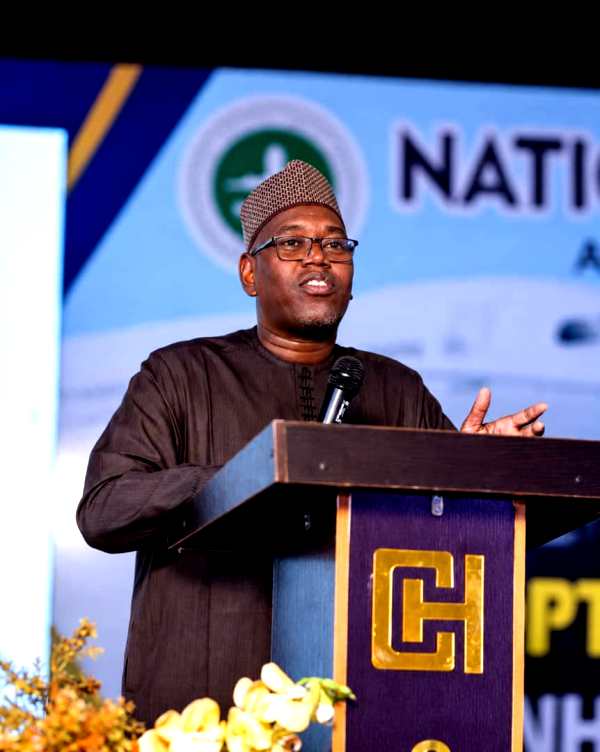
While welcoming efforts to modernize Nigeria’s air navigation infrastructure, including the planned overhaul of the Total Radar Coverage of Nigeria (TRACON) system and the introduction of Automatic Dependent Surveillance–Broadcast (ADS-B) capability, the Director of Aerodrome and Airspace Standards at the Nigeria Civil Aviation Authority (NCAA), Ahmad Abba says “infrastructure projects must include personnel training, maintenance arrangements, spare parts and safety assessments from the outset.”
Delivering his keynote address at the 2026 Annual General Meeting of the National Association of Air Traffic Engineers (NAAE), held at Crispan Suites and Event Centre, Rayfield, Jos, Abba said “modern equipment matters. But equipment alone does not create a safe airspace. Competent people, disciplined operations and effective regulation do.”
He called for competency-based training, regular practical assessment, mentoring and succession planning to prepare engineers for increasingly digital and interconnected systems.
He called for sustained investment in skilled personnel, reliable infrastructure and effective safety oversight to support a safer and more resilient Nigerian airspace.
Speaking on the theme, “Optimizing CNS/ATM Through Enhanced Training, Operation and Regulatory Compliance,” he paid tribute to Air Traffic Safety Electronics Personnel (ATSEPs), whose work keeps the communications, navigation and surveillance systems that support flight operations functioning.
“Every safe instruction depends on a trustworthy system. Behind every trustworthy system is an Air Traffic Safety Electronics professional who has made it work, kept it working and stood ready when it mattered most,” he said.
He noted that passengers may see pilots and aircraft, but rarely see the engineers who maintain the radios, navigation aids, surveillance facilities and other systems on which safe operations depend.
Abba said the AGM theme aligned with the five-point agenda of the Minister of Aviation and Aerospace Development, Festus Keyamo (SAN), particularly its emphasis on compliance with national and international aviation standards, infrastructure development and human capacity development.
He noted that dependable air navigation services also support the growth and sustainability of Nigerian airlines, enhance passenger confidence and contribute to the long-term development of the aviation sector.
The Director commended the Minister’s commitment to strengthening aviation safety and modernizing critical infrastructure, observing that the agenda provides a framework for coordinated action by aviation agencies and industry stakeholders.
Abba highlighted Nigeria’s performance during the ICAO Coordinated Validation Mission (ICVM) of April 2026, when the country recorded an overall Effective Implementation score of 91.45 per cent under ICAO’s Universal Safety Oversight Audit Programme.
In the areas overseen by his Directorate, the score for Aerodromes and Ground Aids rose from 57.26 per cent to 95.16 per cent, while Air Navigation Services improved from 45.30 per cent to 76.07 per cent.
He attributed the achievement to the visionary leadership, commitment and support of the Director-General of Civil Aviation, Capt. Chris Ona Najomo, whose guidance and encouragement strengthened the Authority’s safety oversight work and preparations for the mission.
Abba also acknowledged the policy direction and support of the Minister, as well as the dedication of NCAA management and staff, the ICVM focal points and teams, NAMA and other aviation stakeholders whose collective efforts contributed to the result.
He urged the industry to build on the achievement through continuous improvement, investment in technical capacity and the timely resolution of remaining safety oversight gaps.
Abba also urged attention to ageing infrastructure, dependable power, preventive maintenance and tested contingency arrangements. He identified cybersecurity and interference with satellite navigation signals, including jamming and spoofing, as risks requiring coordinated action by aviation stakeholders and relevant national authorities.
Drawing on his experience as an air traffic controller, he emphasized the need for close communication between engineers and controllers, particularly when technical failures or maintenance activities affect operations.
“Engineers and controllers serve the same aircraft and the same travelling public. Our professional perspectives may differ, but our safety objective is shared,” he said.
The Director encouraged NAAE to work with relevant institutions towards a national agenda focused on six priorities of strengthening ATSEP competence and professional development, improving the reliability and resilience of air navigation infrastructure, strengthening safety assurance and regulatory compliance. preparing for emerging technologies and risks, deepening collaboration across the aviation sector and growing Nigerian technical capability through research, innovation and opportunities for young engineers.
He encouraged the Association to consider establishing a technical working group, in collaboration with relevant institutions, to develop a focused roadmap with practical recommendations.
Abba also called for a positive safety culture in which personnel can report hazards, faults and honest errors, and management acts on those reports.
“Many passengers may never know your name. They are safer because you did your job well. Your contribution is indispensable,” he told the engineers.
He concluded by urging government, regulators, service providers, training institutions and aviation professionals to work together to deliver a safer, more reliable and efficient Nigerian airspace.