AON Threatens Shutdown If Unions Repeat August 11 “Violent Disruptions”, Highlights Impact
The Airline Operators of Nigeria (AON) consisting of Domestic Scheduled, Cargo, and Charter Airline Operators comprising of Fixed (Airplane) and Rotary Wings (Helicopter) operators and Associate members representing the interest of the Commercial Air Transport Industry in Nigeria says “should the events of August 11, 2026, repeat themselves again against any domestic airline, the entire AON member airlines will immediately shut down operations.”
In a communique issued by Nigerian airlines under the AON at the end of its general meeting held on September 23, 2026, at the Transcorp Hilton Hotel, Abuja, AON said it “views these acts as a gross violation of the rights of airlines to a safe and secure operational and business environment and a shameful, despicable and very disturbing development with grave implications for the aviation industry in Nigeria.
ICAO Annex 17 defines ‘unlawful interference’ as “… acts or attempted acts such as to jeopardize the safety of civil aviation.
From the foregoing therefore, the unfortunate events of August 11, 2026 were effectively a violation of aviation safety and security regulations with serious immediate and future local and global implications for the aviation sector in Nigeria.
AON condemns very seriously the recent upsurge in the use of unions to threaten, harass, and intimidate Nigerian airlines by certain quarters. It is illegal, unconstitutional, and above all, an aberration!”
The association recalled that “on Tuesday August 11, 2026, a group of Nigerian aviation unions and others outside the aviation industry embarked on a violent disruptive action.
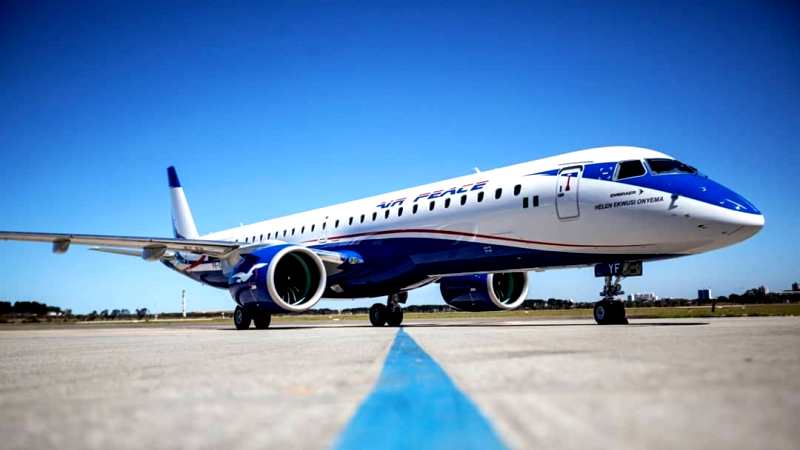
The disruptions occurred both at Murtala Muhammed Airport Terminal 1 (MMA1) and Terminal 2 (MMA2) as well as the Nnamdi Azikiwe International Airport, Abuja where the Union members blocked access to Air Peace’s departure terminals.
The Unions virtually brought all activities of the airline to a screeching halt by blocking the entrances to terminals and check-in counters and preventing the airline workers from accessing their offices and workstations to check-in passengers and offer services to passengers.
There are also recorded cases where members of these unions exhibited willful acts of violence against airline staff and caused bodily harm to some of them. We consider these actions a flagrant violation of the fundamental rights of aviation workers going about their lawful duties and a serious threat to the peace, safety and security within the airport environment.”
Highlighting implications of the unions’ action, AON said “airlines lost huge sums of revenue together with other additional costs as a result of the disruptions. For instance, Air Peace alone had more than 70 of its flights affected with estimated losses of over ₦2 billion. Similarly, more than 30 flights of United Nigeria Airlines, impacting about 13,000 passengers going by the aircraft and sectors scheduled for that day. Furthermore, airlines had to carry the unwarranted burden of rebooking passengers, offering accommodation, paying refunds, repositioning crew, rescheduling aircraft and incurring other recovery costs in an already very harsh operating environment, with unprecedented high fuel costs, very high foreign-exchange based maintenance costs, etc.”
“Though the strike action took place mainly at the Lagos and Abuja airports, other flights across the entire domestic, regional and international networks of the airlines in the country were directly affected as Lagos and Abuja are the domestic hubs that funnel capacity across the country’s entire airports system. Passengers were stranded throughout the nation and beyond,” stated AON, adding that “it is instructive to put on record that the activities of the Unions clearly undermined the airport security regulations and exposed the vulnerability of Nigeria’s airport infrastructure contrary to globally instituted provisions of Aviation Security. When the actions of unions result in passengers and airlines’ staff being prevented from accessing airline terminals, the consequences extend beyond those involved.”
AON equally said “no sooner did the activities of the unions begin to unfold on that fateful day than the confidence of investors in the Nigerian aviation sector began to wane. Lessors who had just recently begun to take interest in the market were forced to begin to reconsider their intentions of investing in the sector, given the ease with which aviation business activities could be majorly disrupted and ground to a halt.”
Apart from the issues regarding the Unions, the AON clarified that “it is never in the interest of any airline to delay or cancel flights as this always has severe financial and image consequences. Delays and cancellations are therefore the last thing any airline wants. In Nigeria, most of the causes of delays and cancellations are factors that are neither in the control of airlines nor caused by them.”
According to AON, some of the more prevalent causes of delays and cancellations include but are by no means limited to weather, the major cause of delays especially during the rainy seasons and the dust haze months of November to March; inadequate aircraft parking space due to congested aprons in both Lagos and Abuja airports; sunset airport restrictions resulting from “a deficit in navigational and functional visual aids, as well as inadequate staffing numbers of technical personnel, most of the secondary airports in Nigeria are open between the hours of 7am and 6pm. Once an airline misses this operating window as a result of one or more of the above-mentioned causal factors, airlines are then forced to cancel scheduled flights to such destinations, further compounding the sub-optimal utilization of their aircraft assets.”
Other contributory factors to flight disruptions and cancellations are VIP Movement. “The closure of the airspace for security reasons to allow certain coded security movements is a significant cause of unpredictable delays across the entire system. This airspace closure for VIP movement though necessary, has its consequences on the operations of the airlines. The delays so occasioned by this factor are not caused by airlines, yet domestic airlines are regularly held responsible for their impact.
“Bird strikes and foreign object damage frequently affect aircraft during, taxiing, take-off and landing. The massive delays occasioned by bird strikes are not caused by the airlines.”
AON also identified unavailability and ever rising cost of aviation fuel which it says costs above N2500 per litre and has continued to rise fast and steadily. On top of the continuous rise in the fuel price, fuel supply is at best epileptic at several secondary airports thereby causing delays; Inefficient Air Traffic Flow as sometimes, airlines have to wait on the ground in a queue for extended periods before being given clearance for takeoff; inadequate airport infrastructure including but not limited to poor Check-in Facilities, lack of adequate Screening and Exit Points, Unserviceable Baggage Carousels, Inadequate and Unreliable Ground Services Equipment from the ground handling companies, all causing avoidable systemic delays.
On the reconstruction of MMIA, Lagos, the “AON commends the current ongoing construction and rehabilitation activities of the Murtala Muhammed International Airport in Lagos. While we appreciate the efforts of the Federal Airports Authority of Nigeria and the Federal Government to upgrade facilities at the airport terminal and give Nigerians a befitting infrastructure, we respectfully request that airlines, who are the key stakeholders, be carried along at the early stage to contribute their ideas towards the functionality and flow of the airport facility so as to address any design flaws that may affect functionality in future.”
The communiqué further states that “it is worth mentioning that the recent incident by the aviation Unions has exposed the vulnerabilities in the security architecture of our airports and response plan by the Aviation Security (AVSEC) and calls for an immediate review and overhaul of security procedures at all airports across the country.
The AON stands united with Air Peace and all our members in maintaining an absolute zero-tolerance policy towards all forms of unlawful interference to the safety of airline operations. We are committed to protecting our employees, revered passengers, equipment and to maintain the highest standards of safety and operational excellence, even with the peculiarities of our constraining operating environment.”
“As a strongly united and deeply committed association of aviation investors and critical stakeholders in the aviation ecosystem, we are averse to any unlawful action or activity that threatens the safety of flight operations and poses danger to our clients and esteemed passengers,” said AON.